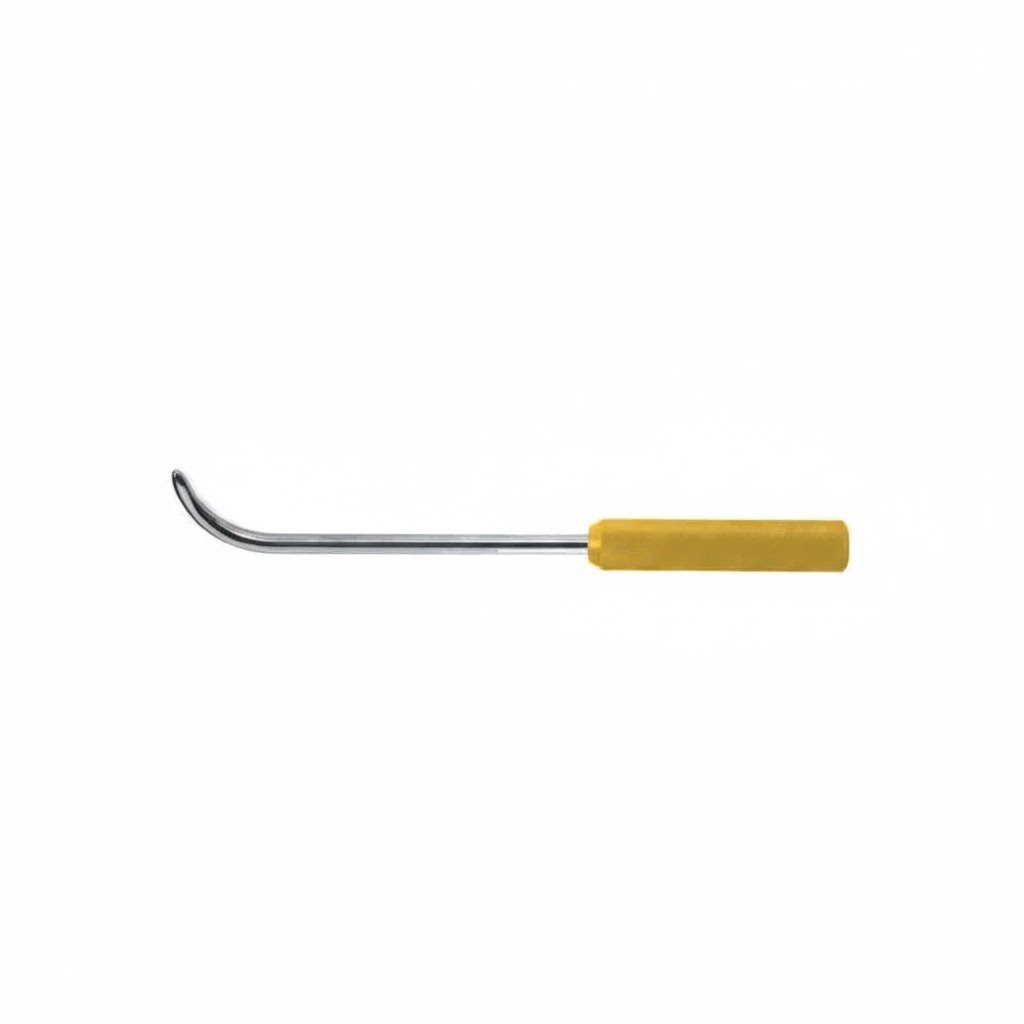
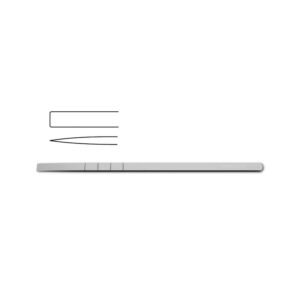
The lateral edge of a breast pocket is where the sensory nerves run, and dividing them costs the patient nipple and skin sensation permanently. Blunt dissection is the protection: nerves are tougher and more elastic than the loose tissue around them, so an instrument that pushes rather than cuts displaces them intact while the surrounding plane gives way. The bilateral design presents that same blunt profile on both edges, so the dissector protects nerves whichever direction it is swept — which matters because lateral release is done back and forth, not in one direction.
The smooth surface serves the muscle above. Creating the subpectoral space means separating pectoralis from the chest wall across a wide area, and a rough or edged instrument abrades the muscle belly as it passes, which bleeds. Bleeding into a closed pocket is the origin of most early haematomas after augmentation. A polished surface slides against the muscle instead of scuffing it.
Specifications
| Pattern | Tebbetts style Emory endoplastic breast dissector |
| Overall length | 33 cm (13″) |
| Design | Bilateral, smooth surface |
| Use | Subpectoral dissection with sensory nerve preservation |
| Material | German stainless steel |
| Autoclavable | Yes |
| SKU | NJM-14653 |
Reviews
There are no reviews yet.