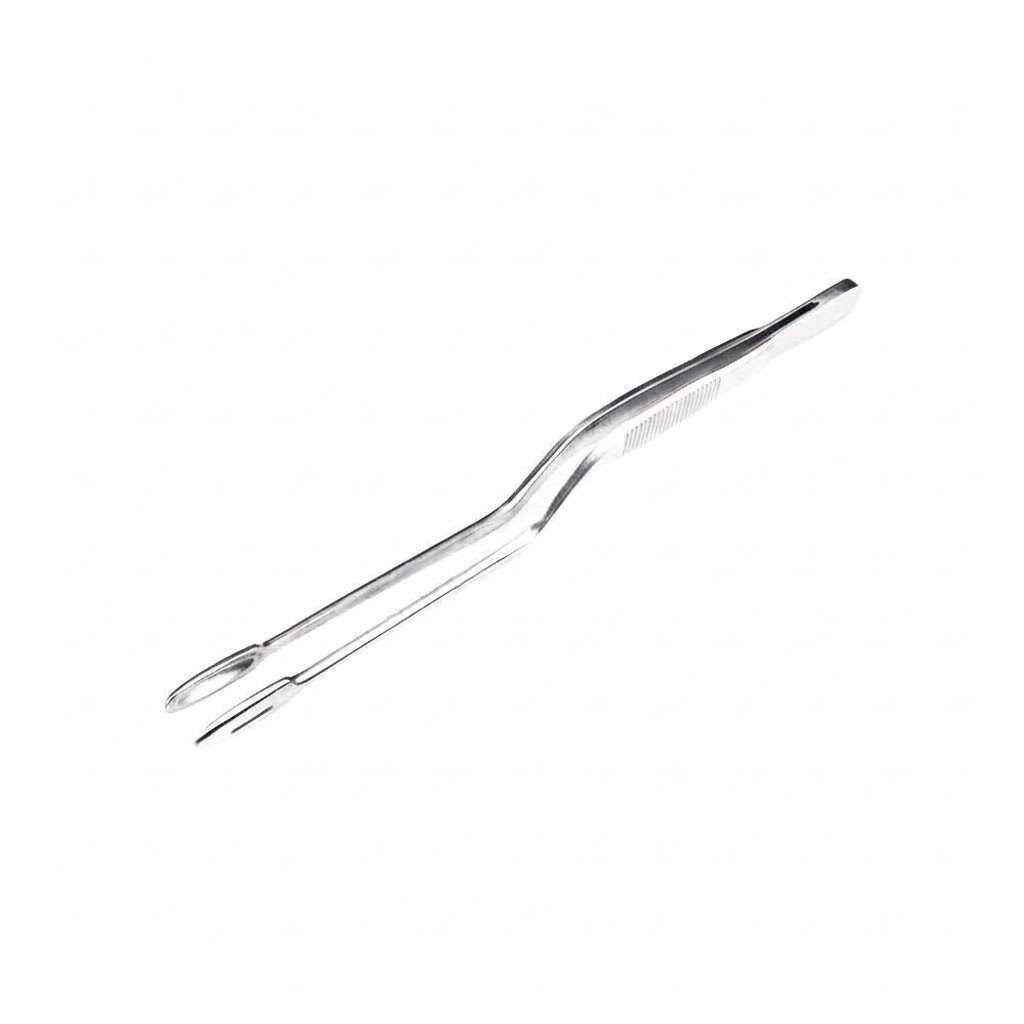
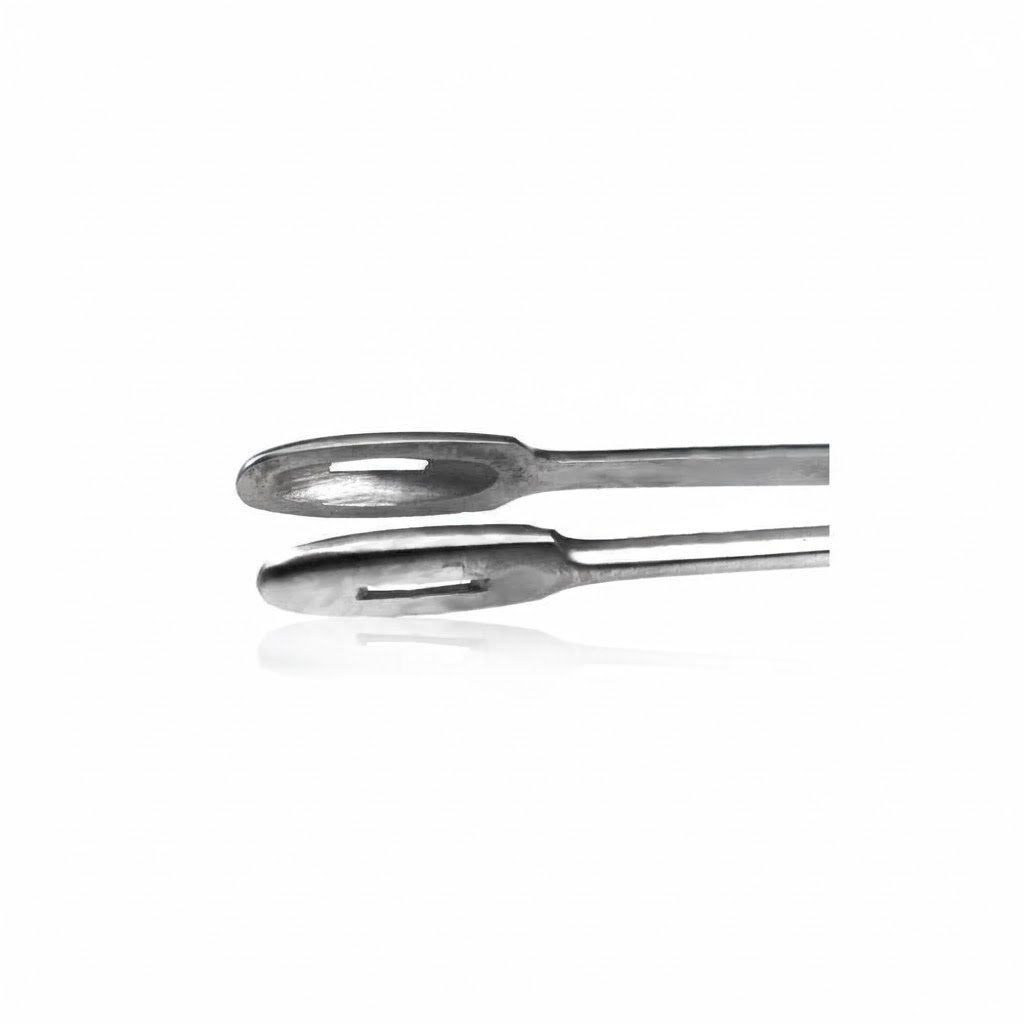
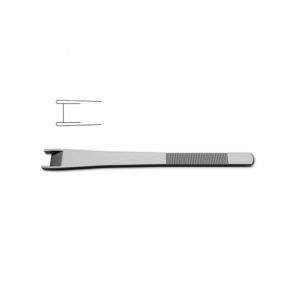
The fenestration is what defines the jaw. An opening through the centre leaves the held graft visible rather than hidden under a solid blade, so the surgeon watches the edge being aligned instead of inferring where it is. Removing the middle of the contact area also concentrates the grip on the oval rim — the cartilage is held around its perimeter, firmly enough to position it while the centre stays uncompressed. That matters on a graft going under thin nasal skin, where a crushed patch remains visible.
This is the straight-shank version. With the tips in line with the handle the instrument goes exactly where the hand points, which suits an open approach with the field already exposed. The bayonet version of the same forceps trades that directness for an offset shank that clears the sightline — the right choice working down a nostril, unnecessary when the field is open.
Specifications
| Pattern | Sheen cartilage forceps |
| Overall length | 165 mm (6-1/2″) |
| Jaws | 6 mm wide, oval fenestrated |
| Shank | Straight, in-line |
| Use | Cartilage grafts in rhinoplasty and reconstructive surgery |
| Material | German surgical stainless steel |
| Autoclavable | Yes |
| SKU | NJM-14456 |

Reviews
There are no reviews yet.