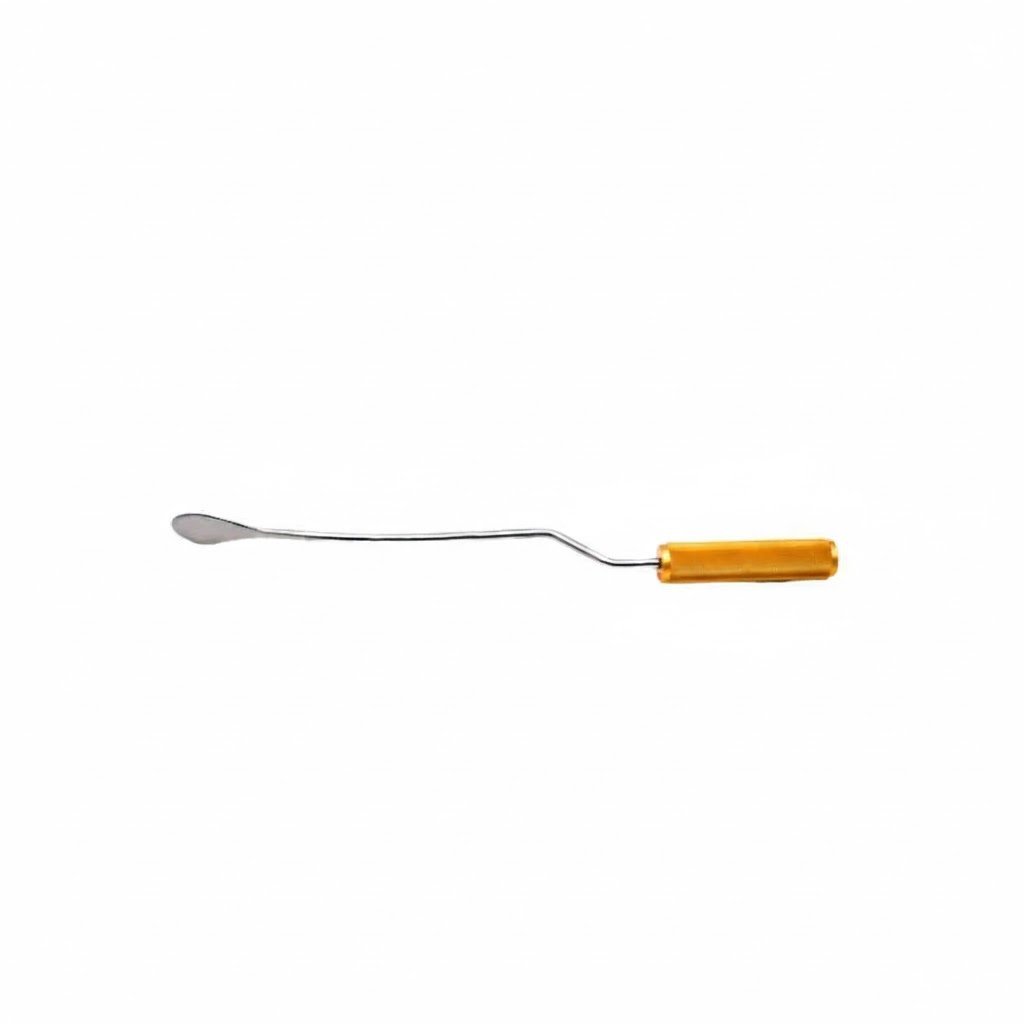
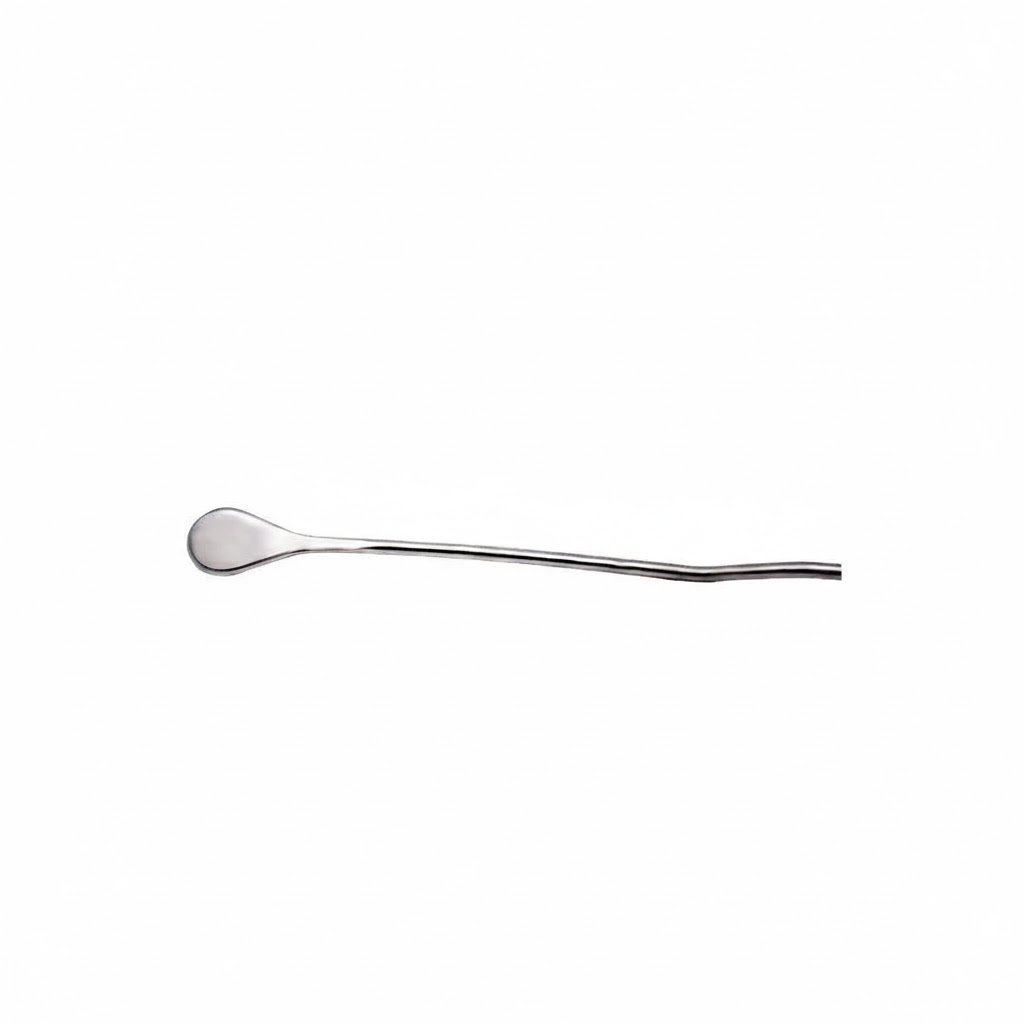
38 mm is close to three times the width of a tunnelling dissector, and the width says what the instrument is for. This is not an instrument for finding a plane; it is for opening one that has already been entered, sweeping across the pocket so a broad band of tissue releases with each pass. A narrow blade would create the same pocket eventually, but as a series of adjacent tunnels with ridges of intact tissue between them, and those ridges distort how an implant sits.
The shaft is straight rather than curved, which suits approaches where the pocket lies on a direct line from the incision. Combined with 41 cm of length it reaches the far margin of a subpectoral pocket while the surgeon’s hand stays well outside the axilla — essential when the entire dissection is judged by feel through a small opening. The same blade serves both planes: above the muscle for subglandular work and beneath it for subpectoral.
Specifications
| Pattern | MacCollum-Dingman breast dissector |
| Overall length | 41 cm (16″) |
| Blade | Straight, 38 mm wide |
| Use | Transaxillary subglandular and subpectoral dissection |
| Material | German stainless steel |
| Autoclavable | Yes |
| SKU | NJM-14637 |
Reviews
There are no reviews yet.