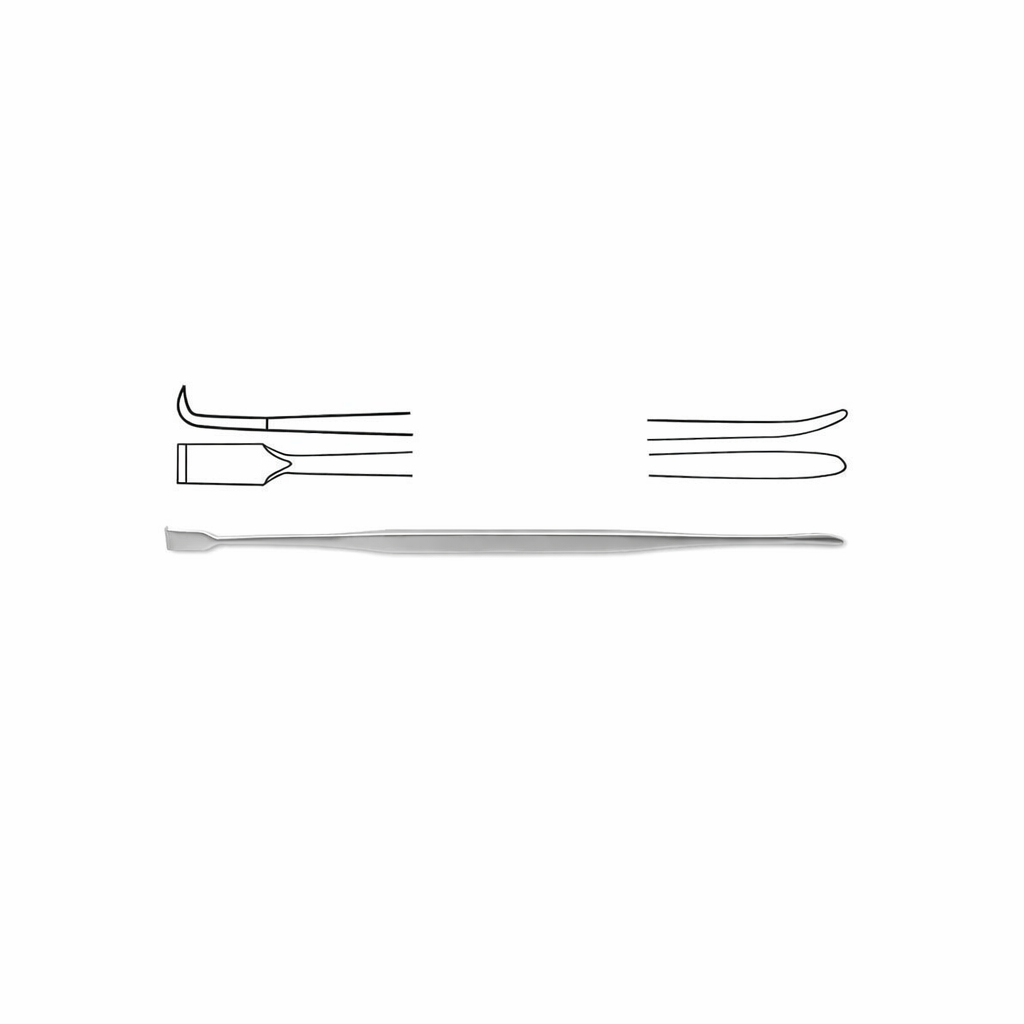
At 21.6 cm this is one of the longer septal elevators, and the length is the reason to reach for it over the 18.5 cm patterns. The septum extends much further back than the nostril suggests, and its posterior third — the junction with the perpendicular plate of the ethmoid and the vomer — sits several centimetres inside the face. A shorter elevator working there leaves the surgeon’s hand pressed against the nose, blocking both the light and the view down the nostril.
The working ends follow the standard septal division of labour. The semi-sharp end is ground to part the perichondrium at the interface without cutting into the cartilage beneath, which is what opens the plane; the blunt end then extends that plane over a wide area with no cutting edge to perforate the flap. Both are 5.0 mm, a width that lifts a useful band per pass while still passing into the narrowing space toward the back.
Specifications
| Pattern | Howarth septum elevator, double-ended |
| Overall length | 21.6 cm (8½”) |
| Blades | 5.0 mm — semi-sharp and blunt |
| Use | Perichondrial incision and posterior septal flap elevation |
| Material | German stainless steel |
| Autoclavable | Yes |
| SKU | NJM-14628 |

Reviews
There are no reviews yet.