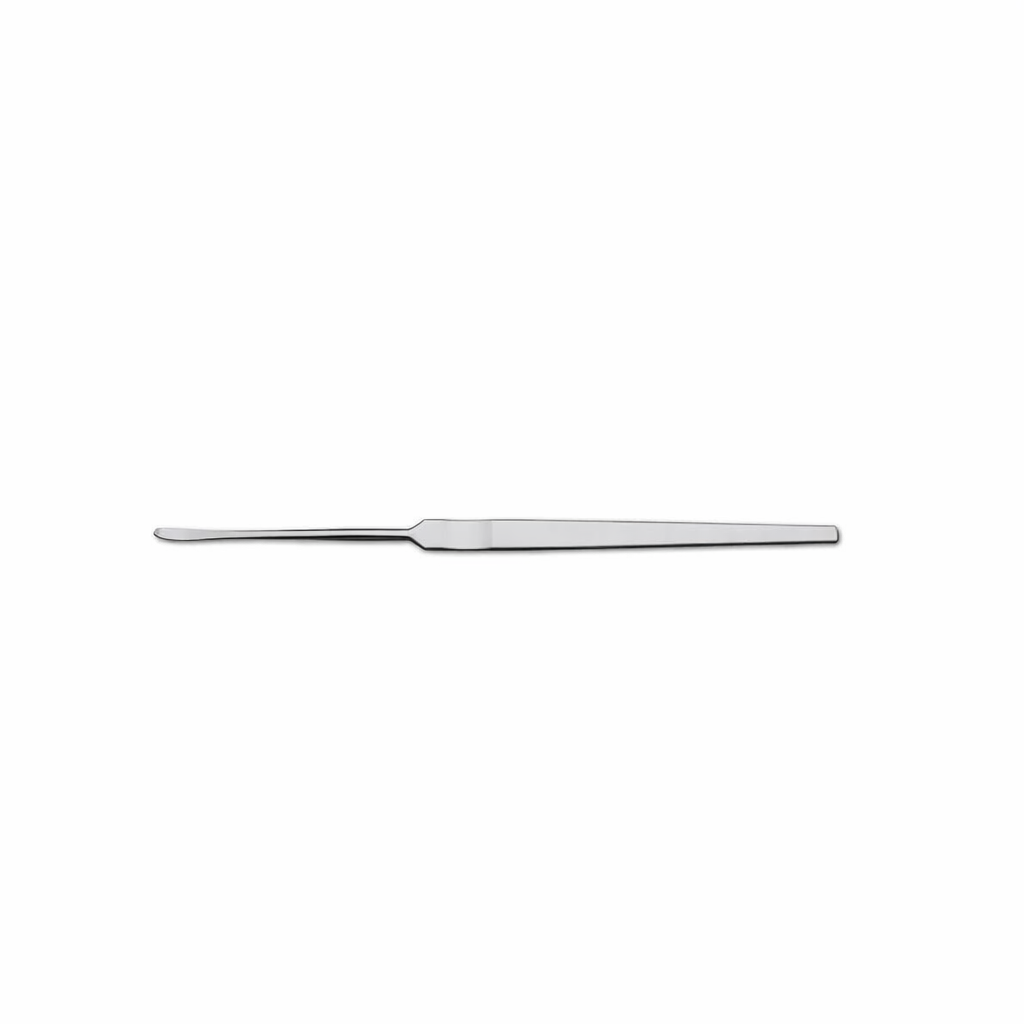
Blade width decides how far back an elevator can work. The nasal cavity narrows markedly toward the back and top, and by the time the dissection reaches the perpendicular plate of the ethmoid the space between the septum and the turbinates is only a few millimetres wide. A 5 or 6 mm elevator has to be angled or forced there, and the force ends up transmitted to the septum rather than along it.
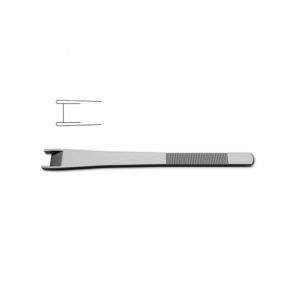
At 3.0 mm this blade passes into that gap without displacing the structures either side of it, so the flap can be raised right back to the bony junction under control rather than by feel. The trade-off is real and worth stating: a narrow blade lifts a narrower band per pass, so the broad anterior septum takes longer with this instrument than with a wider one. It is chosen for the part of the dissection where nothing wider will fit.
Specifications
| Pattern | Halle septum elevator |
| Overall length | 17.8 cm (7″) |
| Blade width | 3.0 mm |
| Use | Mucoperichondrial flap elevation in narrow septal spaces |
| Material | German stainless steel |
| Autoclavable | Yes |
| SKU | NJM-14626 |
Reviews
There are no reviews yet.