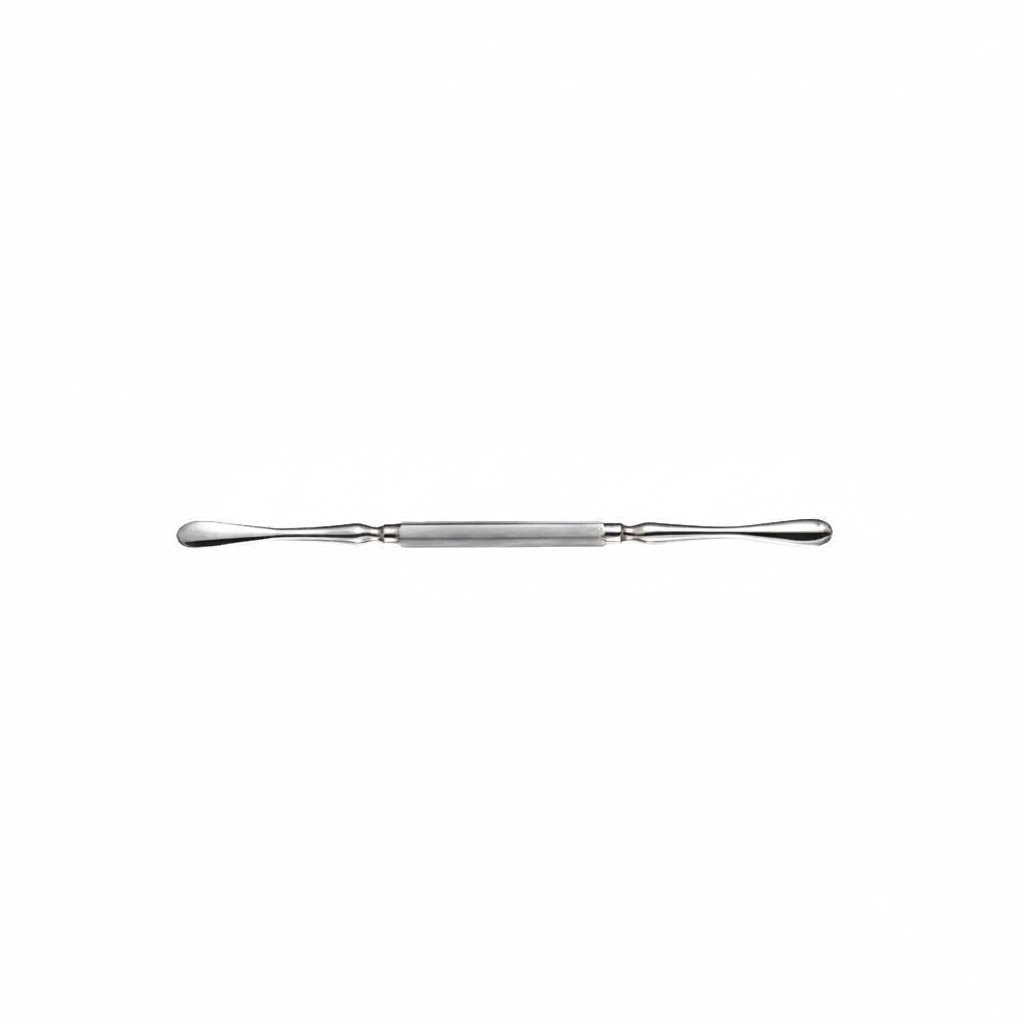
Semi-sharp is the operative word. A fully sharp blade slices perichondrium but also cuts into the cartilage beneath it and shreds the flap edge it is meant to preserve; a blunt blade cannot start the incision at all. An edge ground between the two parts the tissue cleanly at the interface without carrying through into what lies under it — which is why this grind, rather than a true knife edge, is standard on septal elevators.
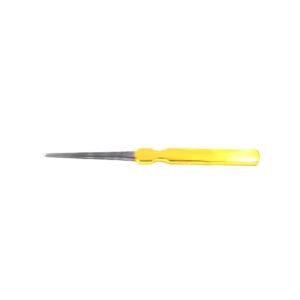
The blades are straight rather than curved, and that suits the septum specifically. Unlike the nasal dorsum or the alar cartilages, the septum is a flat plate; a curved blade following its surface would lift off in the middle of a stroke. A straight blade lies along it for the full length of the pass. Pairing the semi-sharp end with a blunt one on a single 18.5 cm shaft matches the sequence of the operation — incise once, then elevate over a wide area — without an instrument exchange inside the nostril.
Specifications
| Pattern | Hajek-Ballenger septum elevator, double-ended |
| Overall length | 18.5 cm (7¼”) |
| Blades | Straight, 5.0 mm — semi-sharp and blunt |
| Use | Perichondrial incision and mucoperichondrial flap elevation |
| Material | German stainless steel |
| Autoclavable | Yes |
| SKU | NJM-14625 |
Reviews
There are no reviews yet.