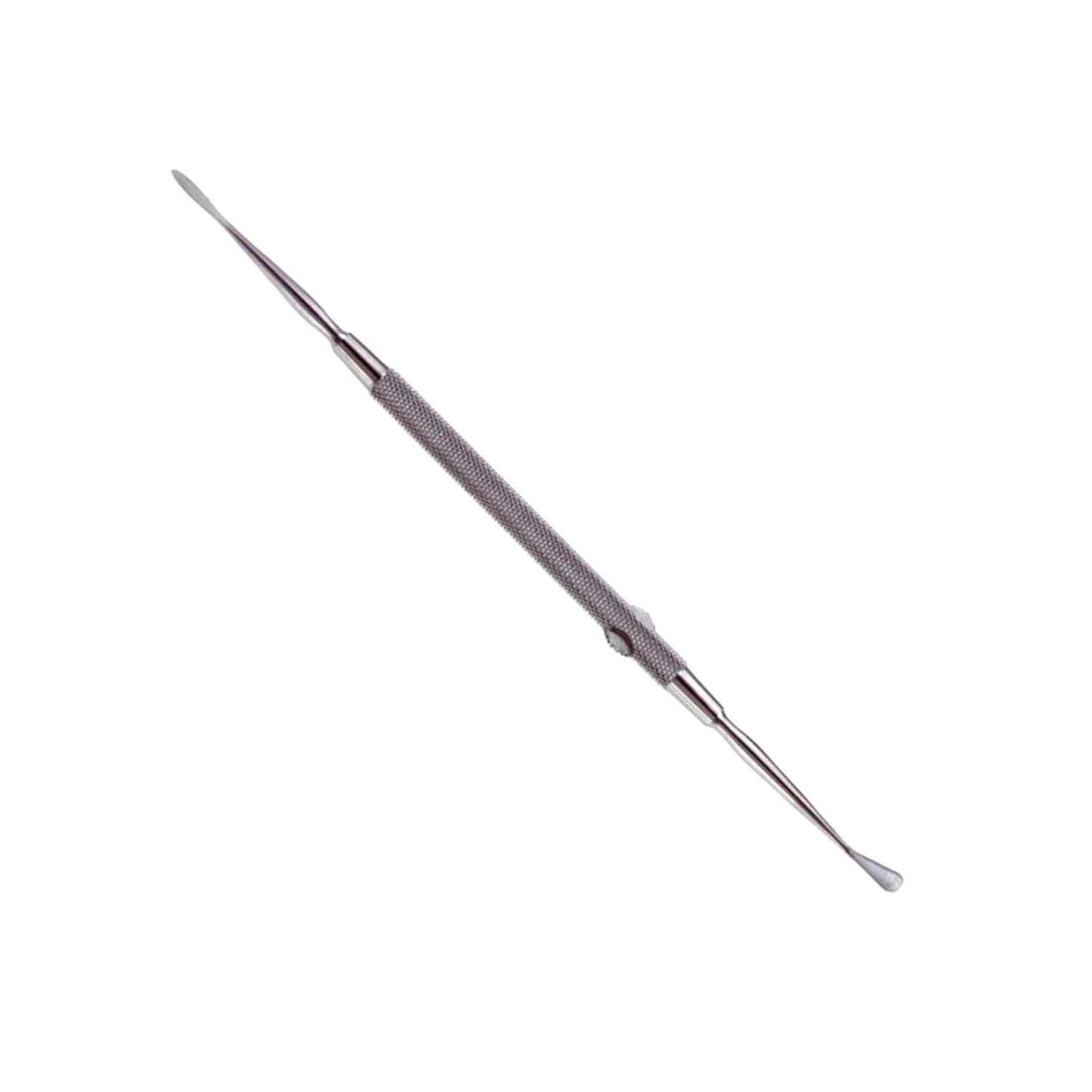
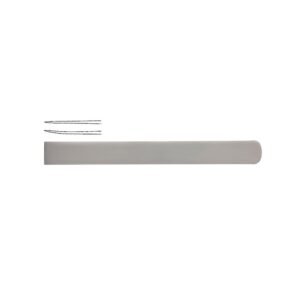
Sharp on both ends is the deliberate difference between this and the Freer elevator it sits beside in most rhinoplasty sets. The Freer pairs a sharp end for opening the plane with a blunt end for continuing it. The Gunter gives up the blunt end entirely and offers two sharp blades in different widths instead — a choice that makes sense when the difficulty of the case is in establishing planes rather than following them.
Firmly adherent or scarred perichondrium, and revision cases where previous surgery has left the tissue planes fused, do not separate under blunt pressure at any width. There the surgeon needs to cut the interface repeatedly at different scales: 6.0 mm across the broad dorsal surfaces, 4.5 mm where the space narrows toward the tip and the valve. Having both sharp widths on one 19 cm shaft means changing scale without changing instrument, and without a blunt end taking up half the tool.
Specifications
| Pattern | Gunter nasal elevator, double-ended |
| Overall length | 19 cm (7½”) |
| Ends | Both sharp |
| Blade widths | 4.5 mm and 6.0 mm |
| Use | Nasal periosteum and perichondrium elevation |
| Material | German stainless steel |
| Autoclavable | Yes |
| SKU | NJM-14624 |
Reviews
There are no reviews yet.