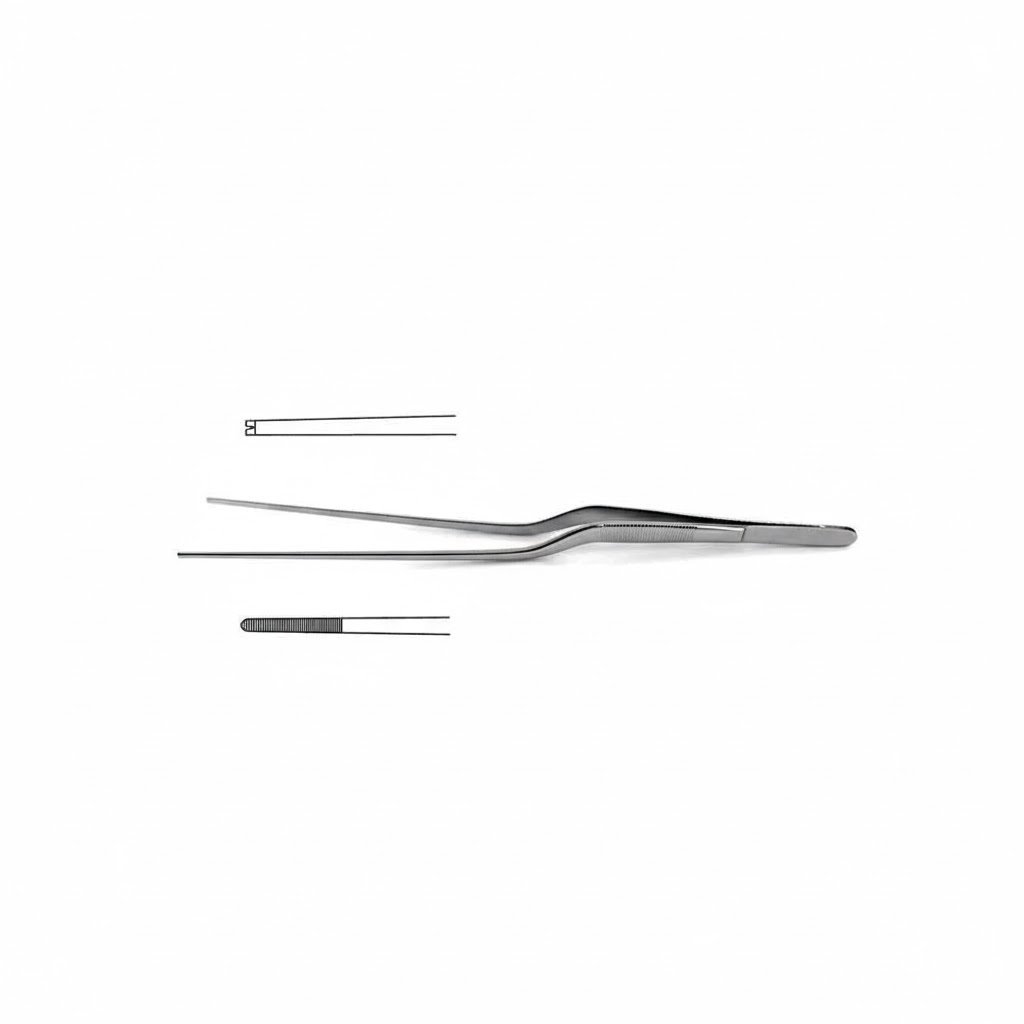
The bent serrated handle is what distinguishes this from the other bayonet patterns. A bayonet shank solves the sightline problem; it does nothing for how the instrument sits in the hand, and a plain bayonet is held in a slightly awkward pinch because the offset works against a natural grip. Bending the handle brings the grip surface back into line with the fingers, so the hand holds it squarely while the tips remain offset.
Serrations on that handle matter for the same reason they matter on any instrument used at length in ENT work — the field is wet, gloves are wet, and a smooth bayonet handle rotates in the fingers, which swings the offset tips somewhere the surgeon did not intend. Jaw choice then sets the job: serrations for dressings and packing, 1×2 teeth for tissue.
Specifications
| Pattern | Gruenwald (Jansen) thumb forceps |
| Style | Bayonet |
| Handle | Bent, serrated |
| Jaw options | Serrated, or 1×2 teeth |
| Use | ENT, microsurgical and dressing procedures |
| Material | German surgical stainless steel |
| Autoclavable | Yes |
| SKU | NJM-14430 |
Reviews
There are no reviews yet.