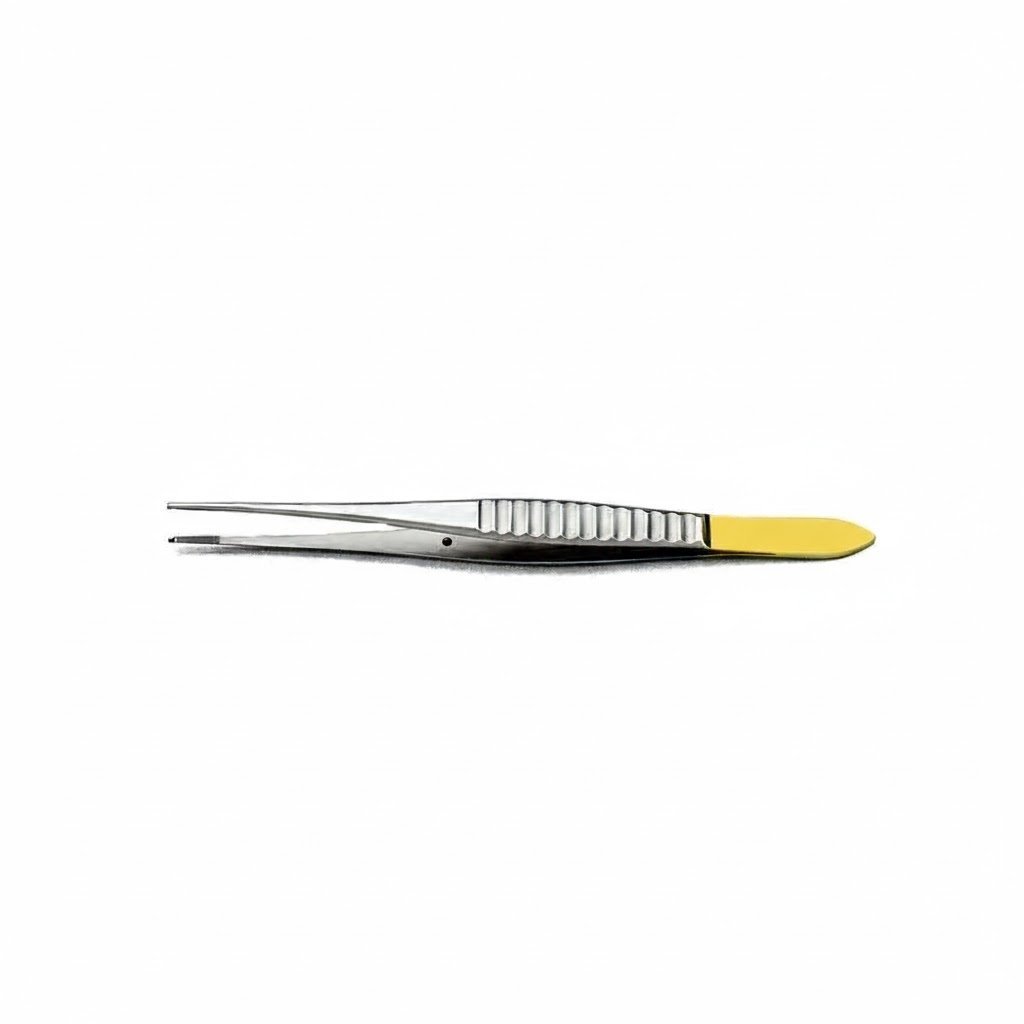
Carbide changes what a 1×2 tooth can be asked to do. In plain steel a single interlocking pair is the most heavily loaded geometry on any forceps — all the holding force passes through one tooth and the gap it seats into — so it is also the geometry that wears first. Once that tooth rounds, it no longer seats and the grip becomes a squeeze.
Tungsten carbide inserts keep the tooth and its seat in shape, which is what allows the same instrument to be used on dense tissue as well as delicate. That range is the point: a surgeon working through a case meets fascia and skin edge and fine subcutaneous tissue in turn, and an instrument that holds all three securely stays in the hand instead of being swapped. The serrated surface behind the teeth grips flat material by friction.
Specifications
| Pattern | Gillies tissue forceps, tungsten carbide |
| Teeth | 1×2 |
| Inserts | Tungsten carbide, serrated |
| Use | Microsurgical, reconstructive and delicate tissue work |
| Material | German stainless steel with tungsten carbide |
| Autoclavable | Yes |
| SKU | NJM-14426 |
Reviews
There are no reviews yet.