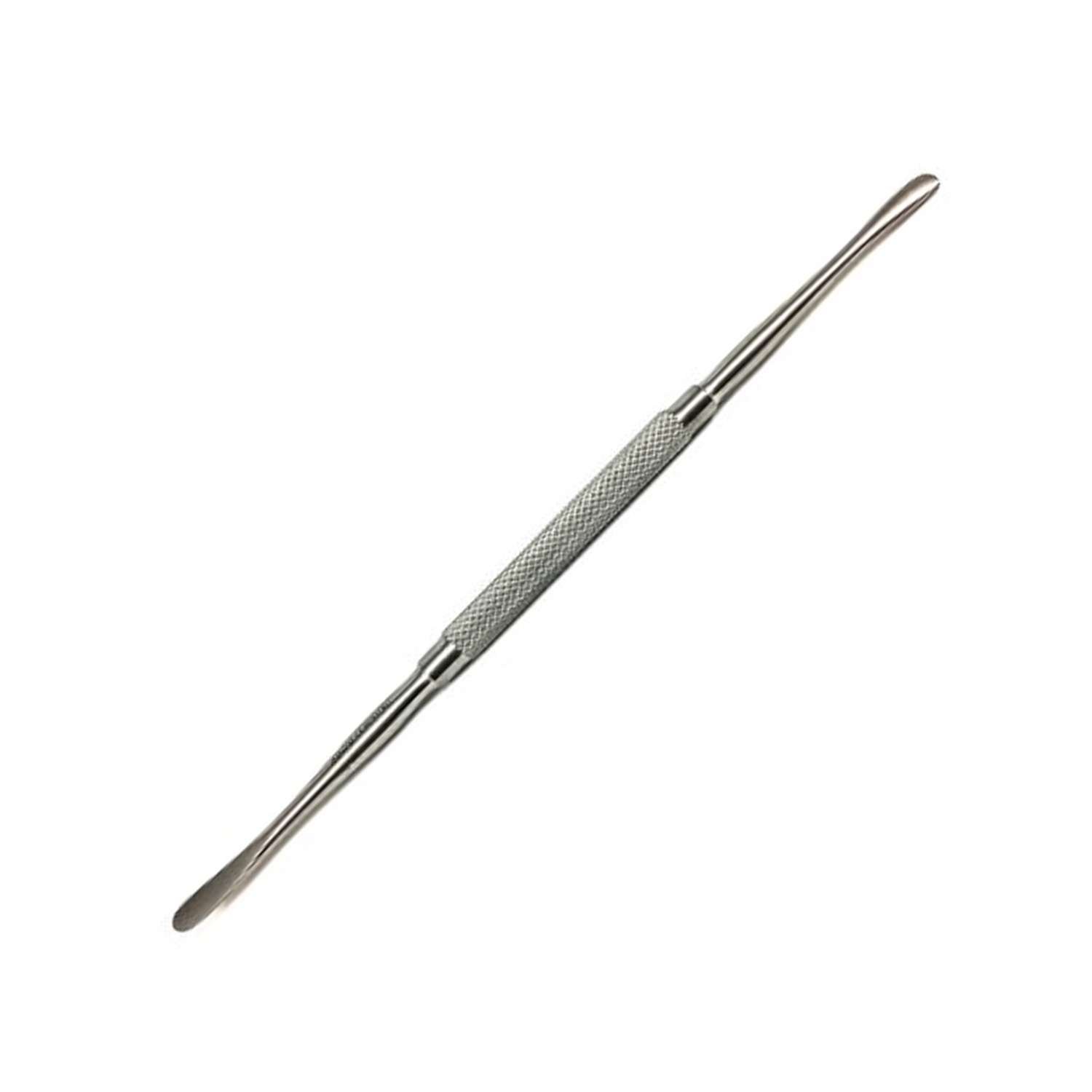
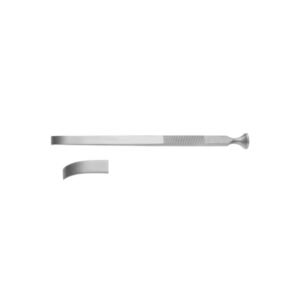
Being single-ended is a deliberate choice rather than a lesser version of the double-ended pattern. With no second working tip, the far end becomes a proper handle that can be gripped along its whole length and pushed against with the palm. On a double-ended instrument the surgeon holds it mid-shaft with a sharp blade pointing back at the hand, which limits how much force can safely be applied and where the fingers can sit.
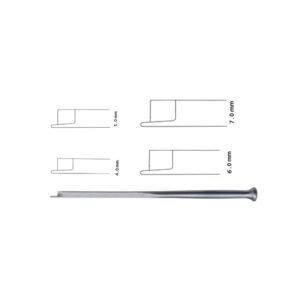
The blade is blunt and curved for the same reason the technique is blunt: once the plane between cartilage and mucoperichondrium is open, everything after that is separation, not cutting. The curve follows the septum’s contour so the full 5.0 mm edge stays in contact as it advances, and a blunt edge riding in the correct plane pushes the flap up rather than through. The same blade lifts periosteum off the bony septum as the dissection passes back from cartilage to bone.
Specifications
| Pattern | Freer septum elevator, single-ended |
| Overall length | 19 cm (7½”) |
| Blade | 5.0 mm wide, curved, blunt |
| Use | Mucoperichondrial flap and periosteal elevation |
| Material | German stainless steel |
| Autoclavable | Yes |
| SKU | NJM-14617 |
Reviews
There are no reviews yet.