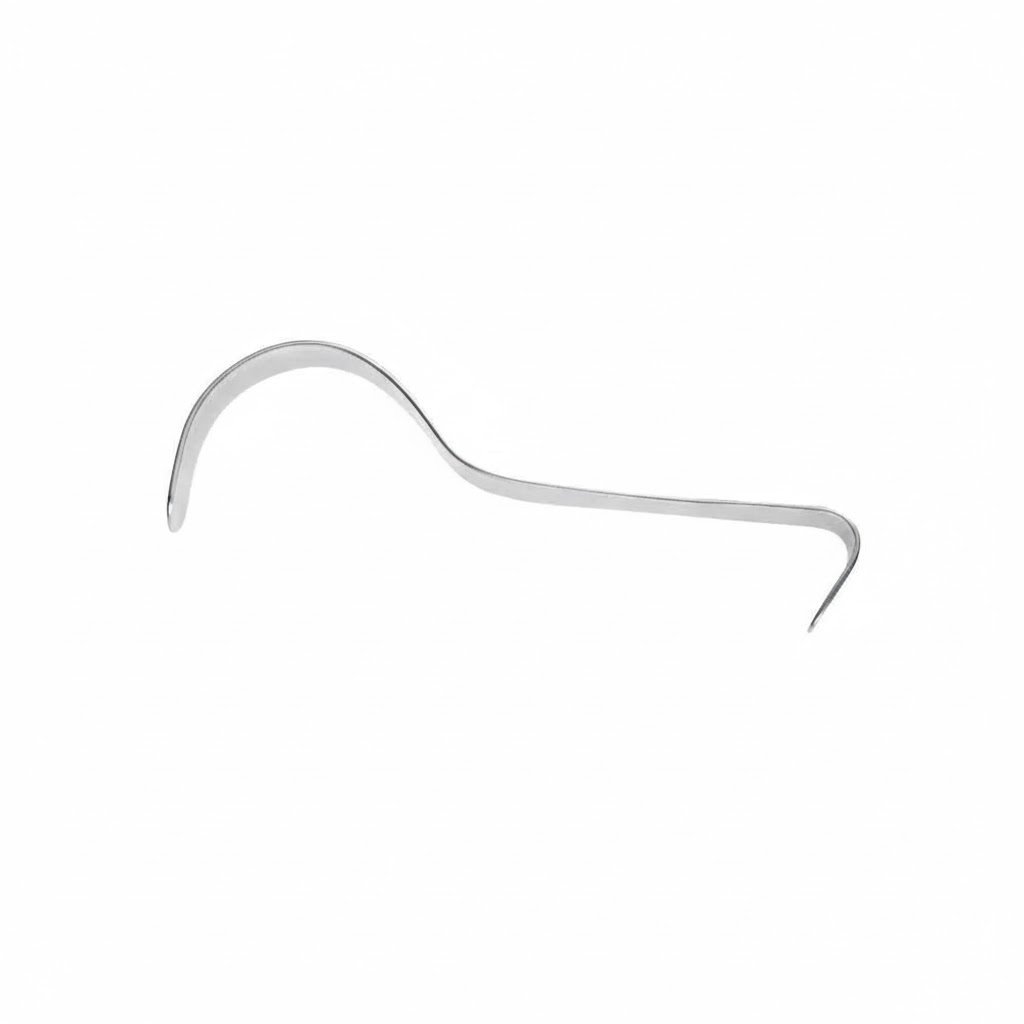
The curve is what defines the Deaver and what makes it work in a body cavity. A flat blade pressed into an abdomen holds tissue back along one line only; a curved blade follows the contour of the cavity wall, so it contacts along its whole length and the load spreads instead of concentrating at the blade edge. In a cavity where the retractor bears on bowel, liver or lung for the length of an operation, that difference is measured in tissue damage.
The curve also lets the blade reach around a structure rather than pushing straight past it. Held against the abdominal wall it sweeps organs medially and holds them there, opening a corridor to what lies behind — which is how deep abdominal and thoracic exposures are made without an incision large enough to see everything directly. The Deaver remains one of the most widely stocked general retractors precisely because it does this in almost any cavity procedure.
Specifications
| Pattern | Deaver retractor |
| Blade | Curved |
| Use | Abdominal, thoracic and general surgical retraction |
| Material | German stainless steel |
| Reusable | Yes |
| Autoclavable | Yes |
| SKU | NJM-14698 |

Reviews
There are no reviews yet.