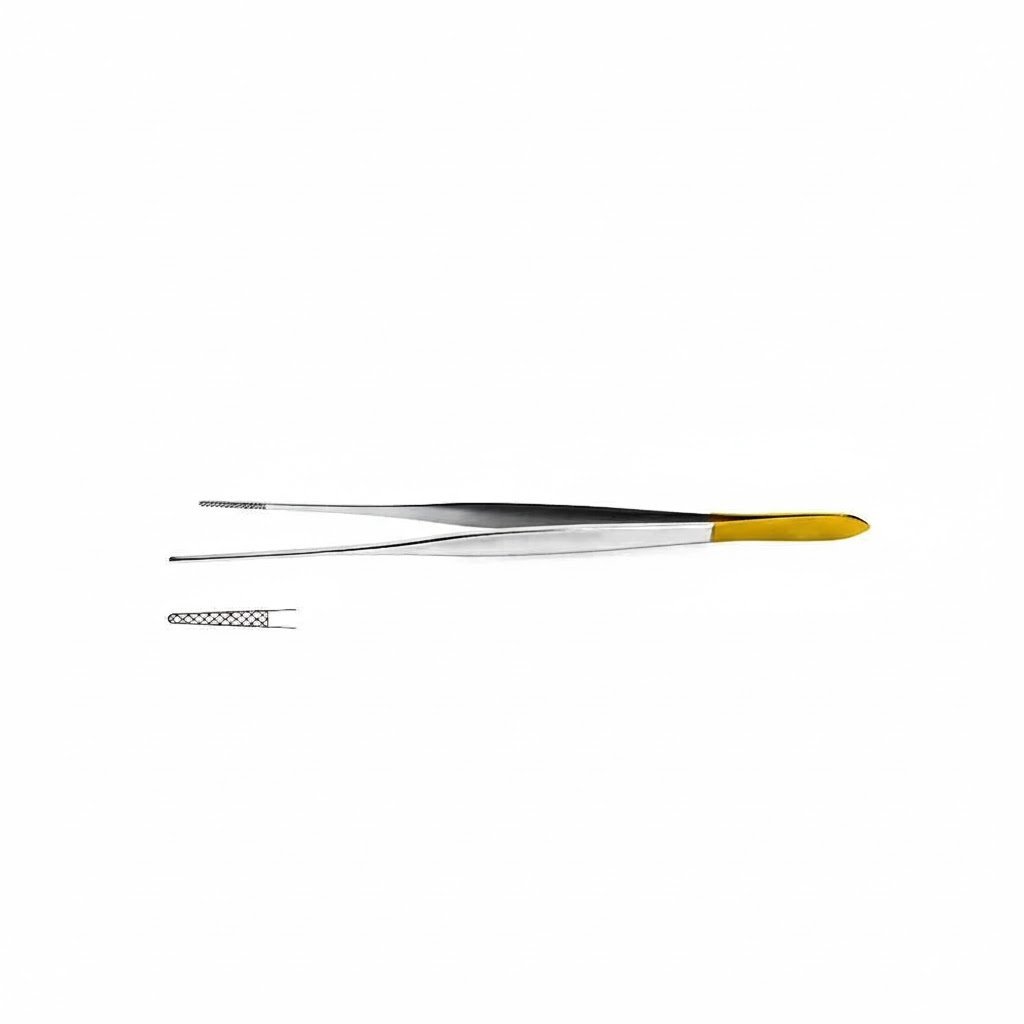
In a narrow corridor the jaws have to pass through tissue to reach what they are grasping, and every millimetre of jaw thickness displaces tissue on the way in. A thin jaw slides into a plane that a thicker one would have to force open — which matters in neurosurgical and microsurgical fields where the tissue being pushed aside is the reason for operating carefully in the first place.
Thin jaws in plain steel would flex and lose their meeting point under load, which is why this pattern is made in tungsten carbide: the material is stiff enough that a slim jaw still closes accurately. Cross-serration then supplies the grip that a thin jaw cannot get from surface area, gripping in every direction rather than only across one set of ridges — so the instrument holds firmly on both delicate tissue and tougher material despite its slim profile.
Specifications
| Pattern | Cushing thumb forceps |
| Jaws | Very thin, tungsten carbide |
| Serration | Cross-serrated |
| Use | Delicate tissue handling and suturing in narrow fields |
| Material | Tungsten carbide |
| Autoclavable | Yes |
| SKU | NJM-14411 |
Reviews
There are no reviews yet.