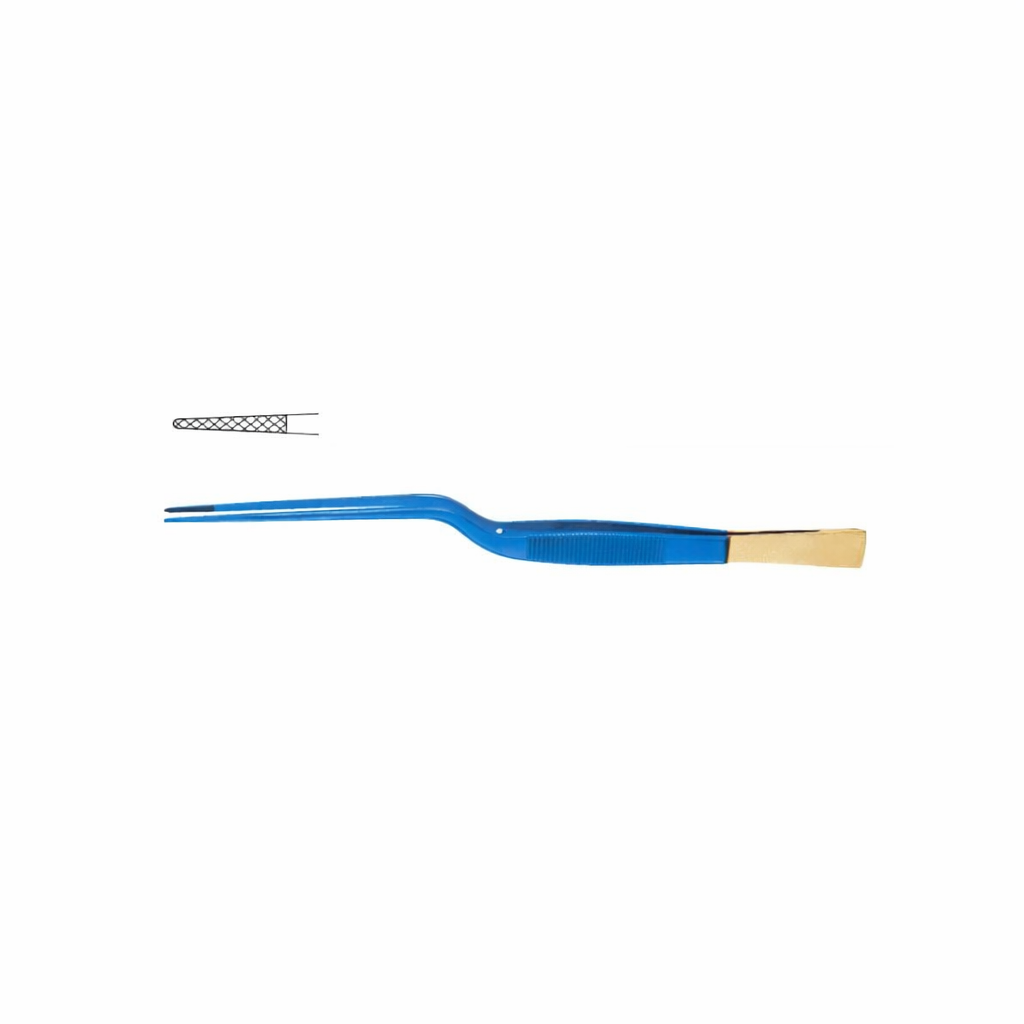
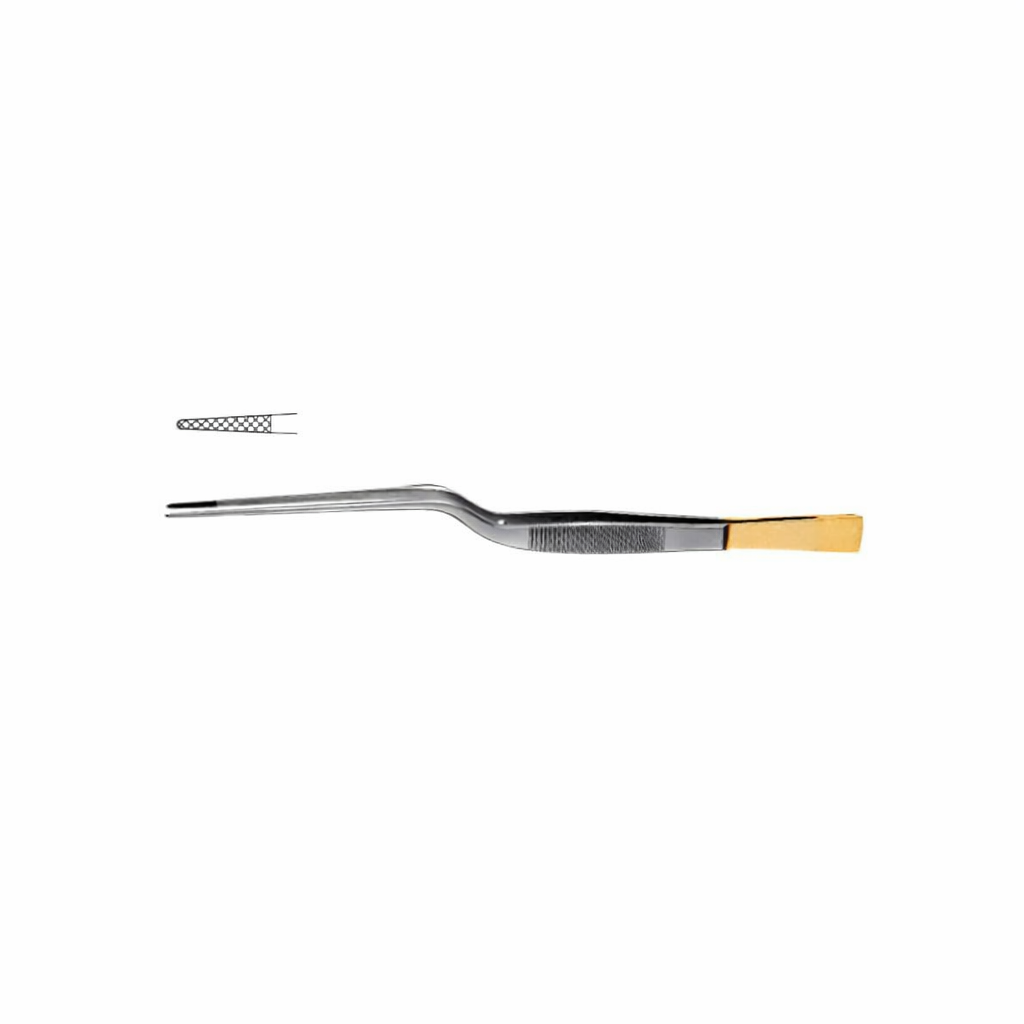
The bayonet shape and the carbide jaws solve two halves of the same problem. Neurosurgical work happens at the end of a long narrow approach where the surgeon is looking straight down the axis — the bayonet keeps the hand out of that sightline. But it also means anything dropped or re-gripped at depth is very difficult to retrieve, so the grip itself has to be right first time.
Carbide serrations are what deliver that. Steel serrations flatten against needle bodies over time, and a flattened jaw rotates on a needle rather than holding it — tolerable in a shallow field where the surgeon simply re-grips, expensive at the bottom of a craniotomy. Tungsten carbide keeps the serration profile through years of closing on steel, so a needle picked up at depth stays where it was taken.
Specifications
| Pattern | Cushing dressing forceps, bayonet |
| Jaws | Tungsten carbide, serrated |
| Shank | Bayonet |
| Use | Needles, sutures and tissue in deep surgical fields |
| Material | German stainless steel with tungsten carbide |
| Autoclavable | Yes |
| SKU | NJM-14410 |
Reviews
There are no reviews yet.