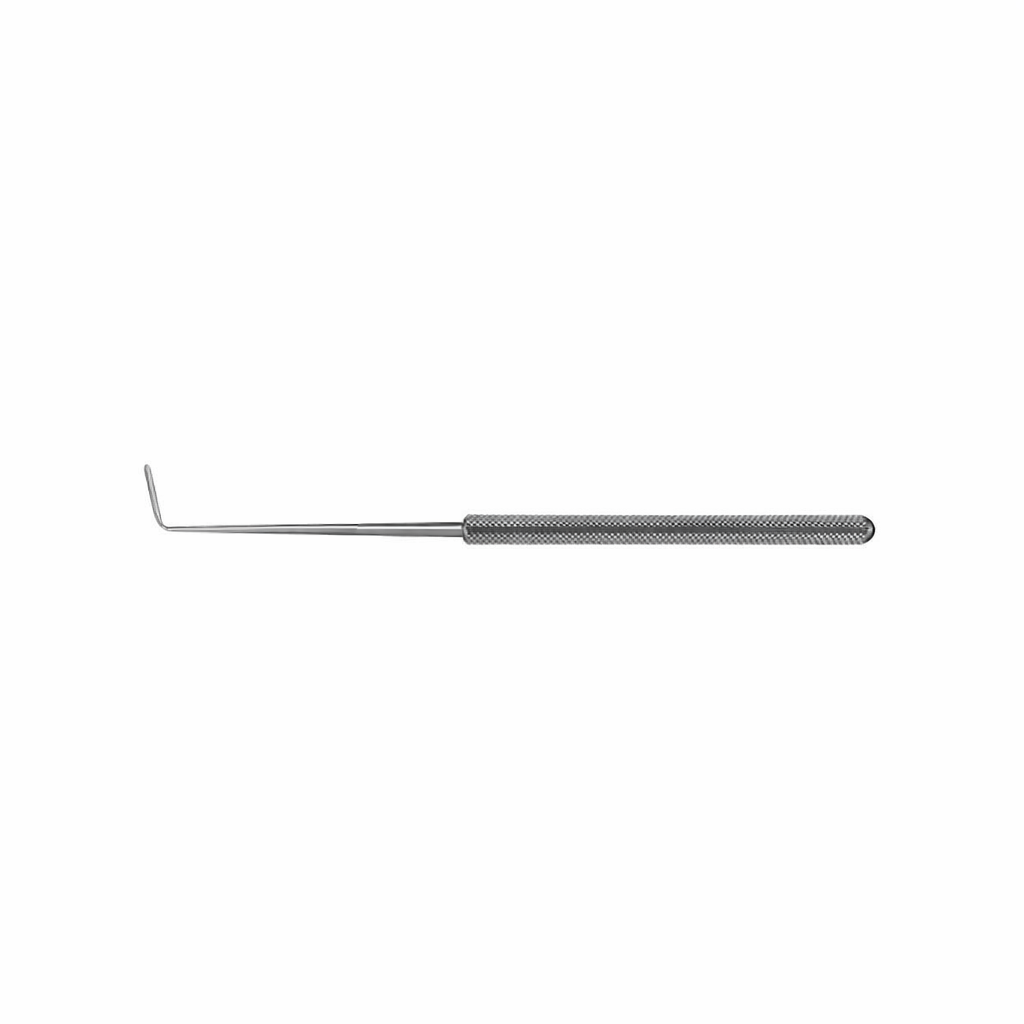
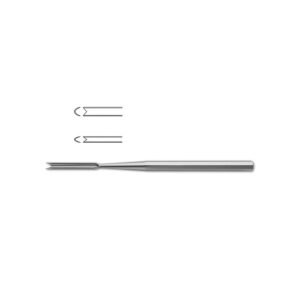
A tapered blade solves a problem that two separate elevators otherwise solve. Raising a mucoperiosteal flap needs a narrow edge at the start, where the tissue is fully attached and force has to be concentrated to open the plane at all — then a wider face to continue, so the lift spreads across a broad front and the flap peels rather than tearing at a point. A blade that widens along its length delivers both, changing effective width simply by how deeply it is advanced.
16 cm is short for a palate instrument, and that suits the field. The palate is a ceiling a few centimetres inside the mouth, so reach is not the constraint — control is. A shorter shaft keeps the working tip close to the hand, where small angle corrections happen by feel. That matters because in cleft repair the flap must come up as one continuous sheet: it will be moved medially to close the gap, and a tear in it is a hole in the repair rather than a cosmetic blemish.
Specifications
| Pattern | Cronin cleft palate elevator |
| Overall length | 16.0 cm (6¼”) |
| Blade | Tapered |
| Use | Raising mucoperiosteal flaps in cleft palate repair |
| Material | German stainless steel |
| Autoclavable | Yes |
| SKU | NJM-14607 |
Reviews
There are no reviews yet.