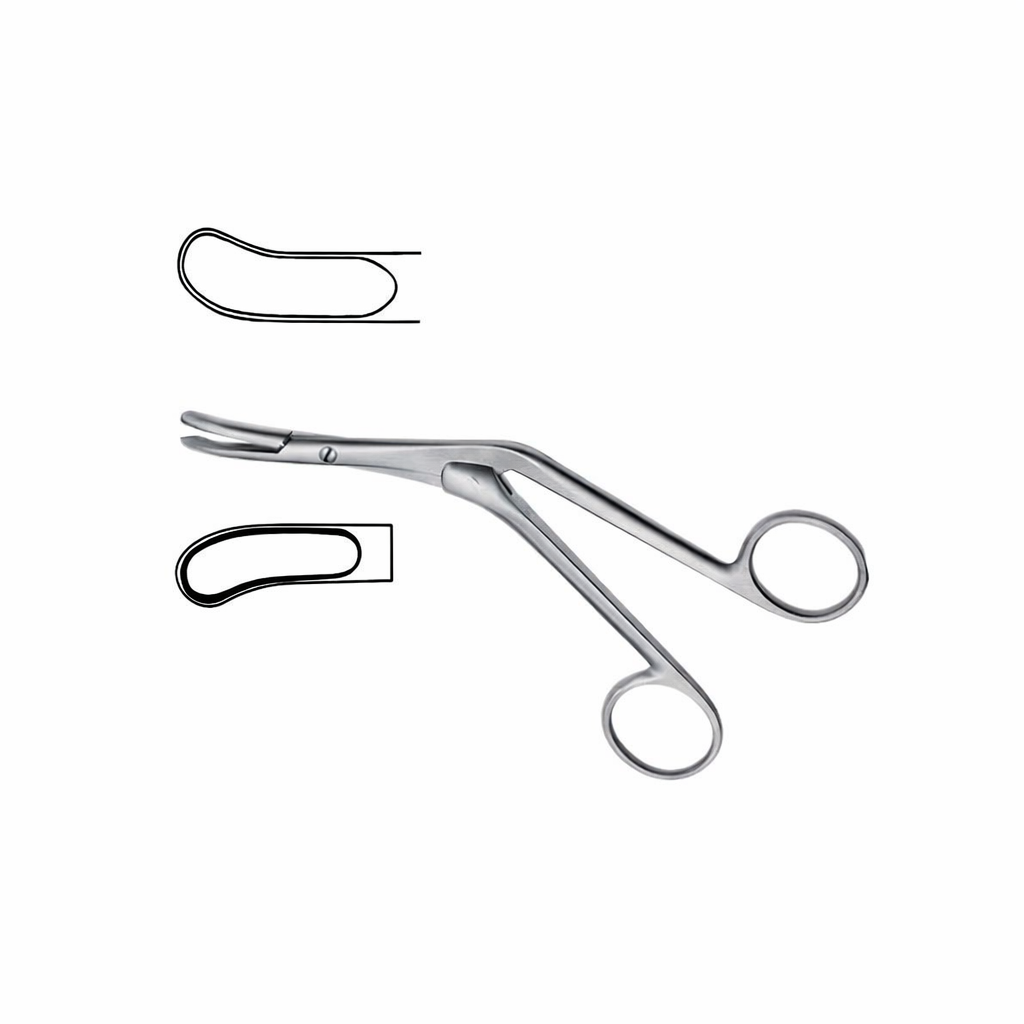
The Craig–Domnick differs from the standard Craig in one respect that changes how it is used: the blades bend sideways. A straight Craig approaches the septum along the axis of the nostril, which works when the target is directly ahead. A deviated septum, by definition, is not — it curves into one nasal passage, and the surgeon working from that side is trying to grasp a surface that is turning away from the instrument.
The sideward bend lets the cupped jaws come at that surface squarely. Right-curved and left-curved versions exist because the direction of deviation determines which side the surgeon must approach from. The cupped blunt jaw holds septal tissue securely without the perforation risk of a toothed jaw.
Specifications
| Pattern | Craig–Domnick, sideward-bending, cupped blunt jaws |
| Curve | Right-curved or left-curved |
| Overall Length | 16 cm |
| Application | Deviated septum correction |
| Material | Surgical-grade stainless steel |
| Autoclavable | Yes – standard autoclaving |
| SKU | NJM-14333 |


Reviews
There are no reviews yet.