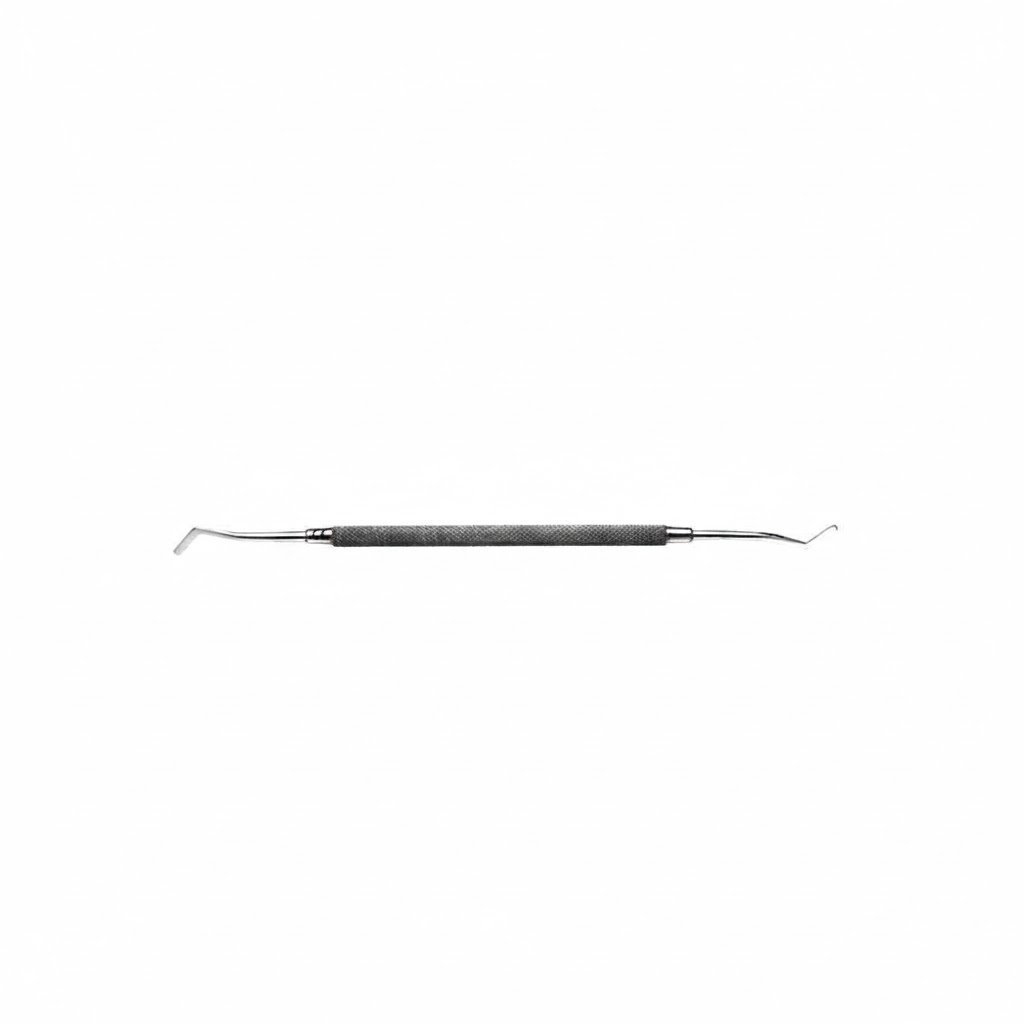
Blade width sets the smallest space an elevator can work in, and at 3.0 mm and 4.5 mm this pair is deliberately fine. Much of oral and maxillofacial dissection happens in gaps measured in millimetres — between tooth roots, along a thin alveolar ridge, beneath a flap that will not stretch further. A 6 mm blade in those places has to be forced, and force applied to a blade that does not fit is how periosteum tears and bone edges chip.
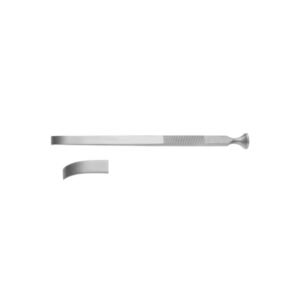
Working that small brings its own problem: a narrow blade concentrates force into a small area, so it can punch through the layer it is meant to lift if the angle is wrong. The round handle is what keeps the angle right — it rolls between the fingers so the blade can be kept flat to a curving surface throughout a stroke, rather than being locked to one orientation by a flat handle and re-gripped every few millimetres.
Specifications
| Pattern | Clodius elevator, double-ended |
| Overall length | 19 cm (7½”) |
| Blades | 3.0 mm and 4.5 mm |
| Handle | Round |
| Use | Oral, maxillofacial and reconstructive procedures |
| Material | German stainless steel |
| Autoclavable | Yes |
| SKU | NJM-14596 |
Reviews
There are no reviews yet.