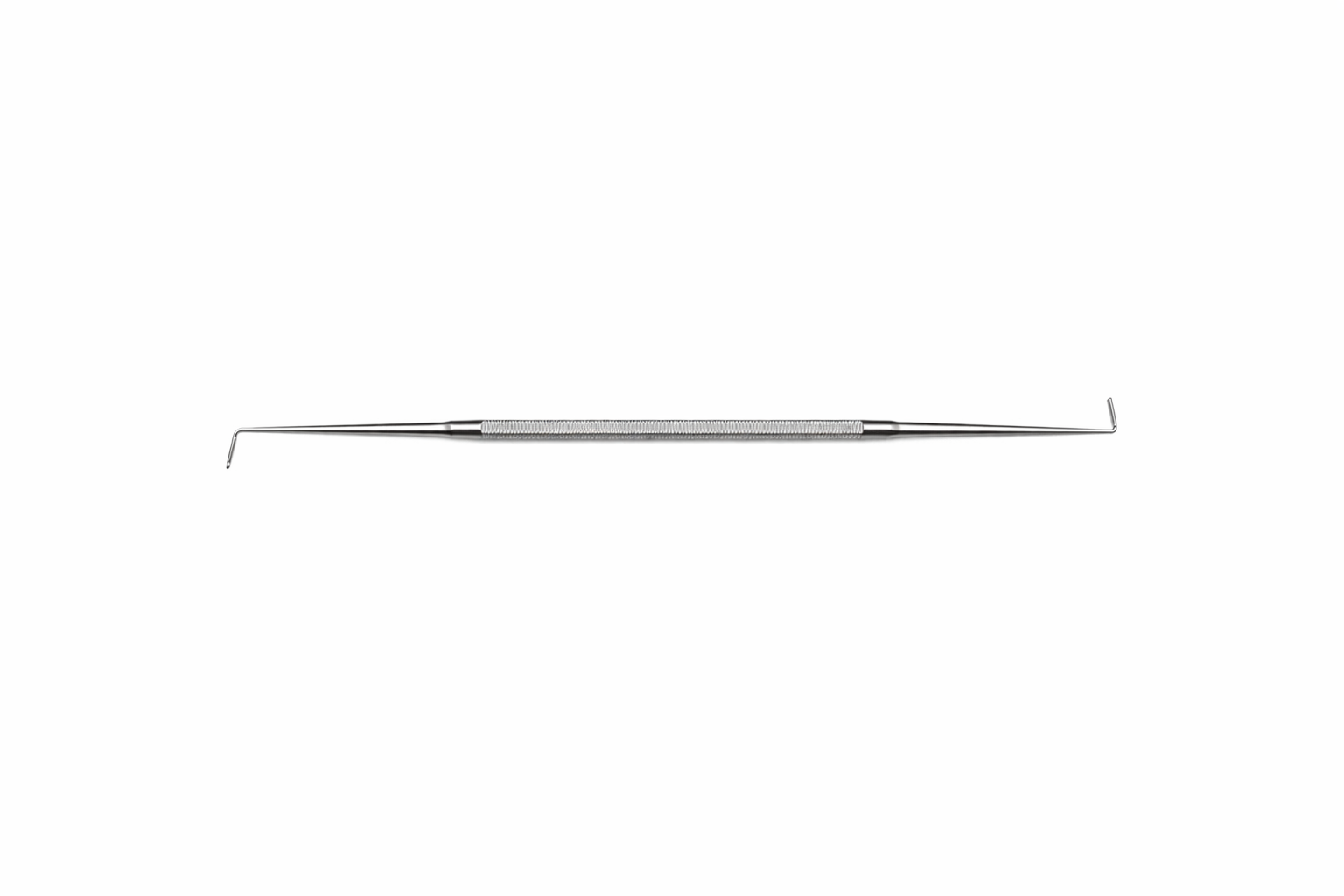
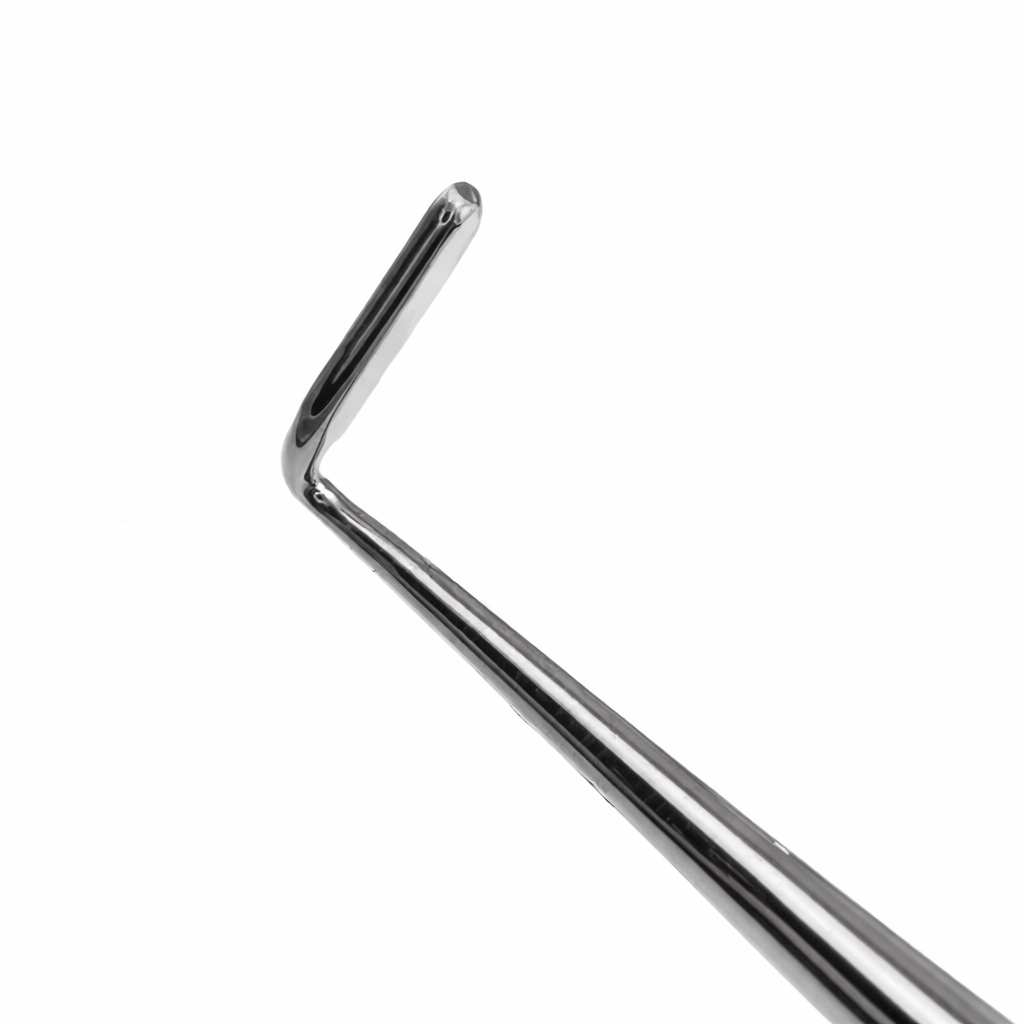
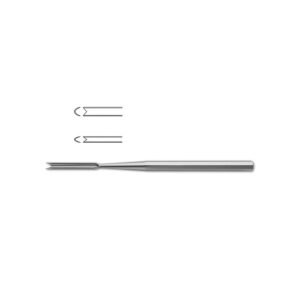
Pharyngeal flap surgery is done around a corner. The flap is raised from the back wall of the throat and inset into the soft palate, and that wall sits behind and above the palate rather than in front of the surgeon. Angled blades let the working tip meet the tissue squarely while the shaft passes through the mouth at a completely different angle — a straight elevator would either point at the palate or have to be levered against the teeth to reach past it.
The two widths, 3.0 mm and 5.0 mm, cover the range of tissue thickness in one instrument. The pharyngeal wall and the palatal tissue it joins differ in bulk and in how firmly they are attached, and matching blade width to the layer keeps the dissection in plane. At 21 cm the elevator reaches the posterior pharynx with the handle still outside the mouth, and the round handle can be rotated between the fingers to change the working angle without releasing the grip.
Specifications
| Pattern | Barsky pharyngeal flap elevator, double-ended |
| Overall length | 21.0 cm (8¼”) |
| Blades | Angled, 3.0 mm and 5.0 mm |
| Handle | Round |
| Use | Cleft palate and pharyngeal flap procedures |
| Material | German stainless steel |
| Autoclavable | Yes |
| SKU | NJM-14592 |

Reviews
There are no reviews yet.