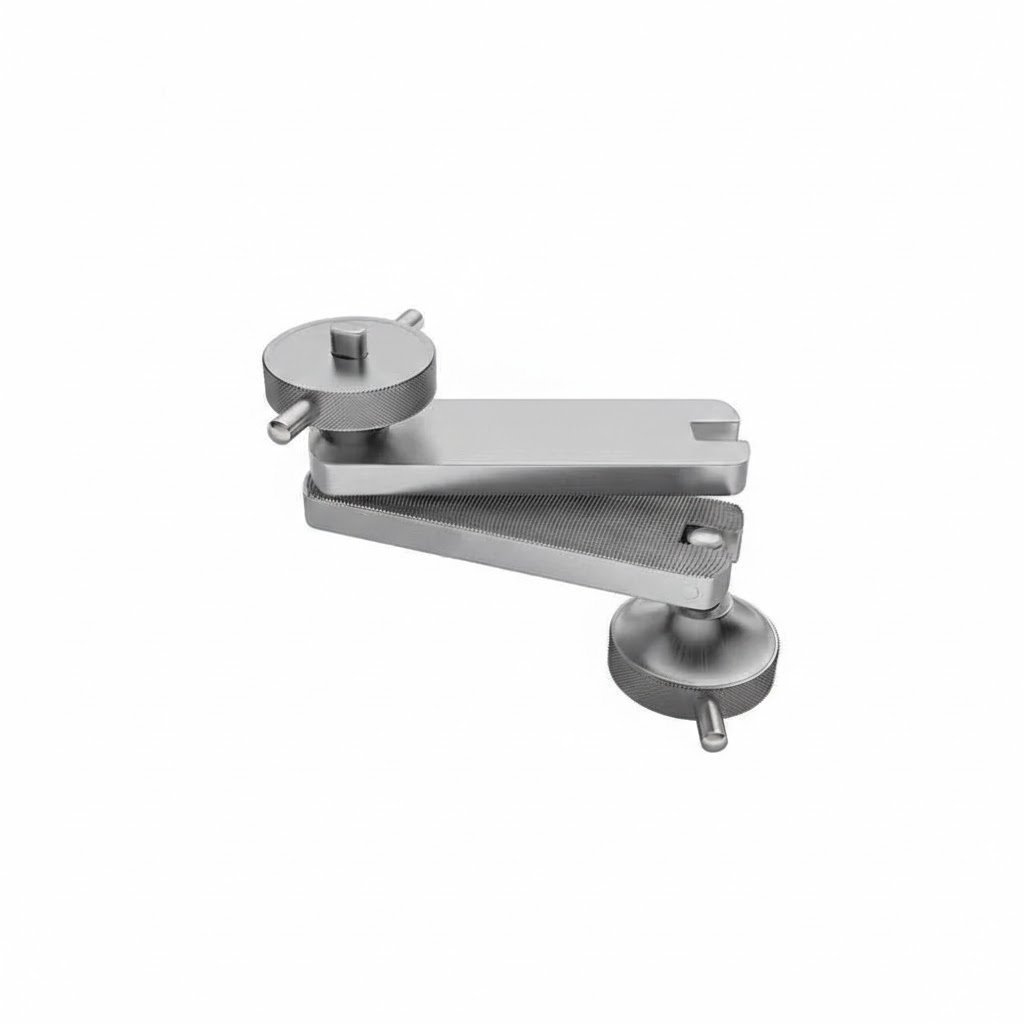
Three surfaces exist because a graft is not always wanted in the same state. The smooth plate compresses cartilage evenly and leaves the surface intact, which suits a graft that must stay visible-edge-free under thin skin. Longitudinal serrations score parallel grooves so the graft bends predictably along one axis. Cross-serration works the cartilage in both directions at once, producing the softest, most fully morselised result for camouflage and filling.
Being able to switch between them mid-procedure matters more than owning three instruments, because the surgeon rarely knows in advance how a particular piece of cartilage will behave — thickness, calcification and springiness vary between patients and between sites in the same patient. The 65 × 30 mm area handles a full dorsal graft in a single placement, and German stainless steel construction keeps the plates true under the loads that crushing calcified cartilage demands.
Specifications
| Pattern | Jost (Gubisch) cartilage crusher |
| Working surface | 65 × 30 mm |
| Plates | Three interchangeable — smooth, longitudinal, cross-serrated |
| Use | Crushing, scoring and sculpting cartilage grafts |
| Material | German stainless steel |
| Autoclavable | Yes |
| SKU | NJM-14967 |
Reviews
There are no reviews yet.