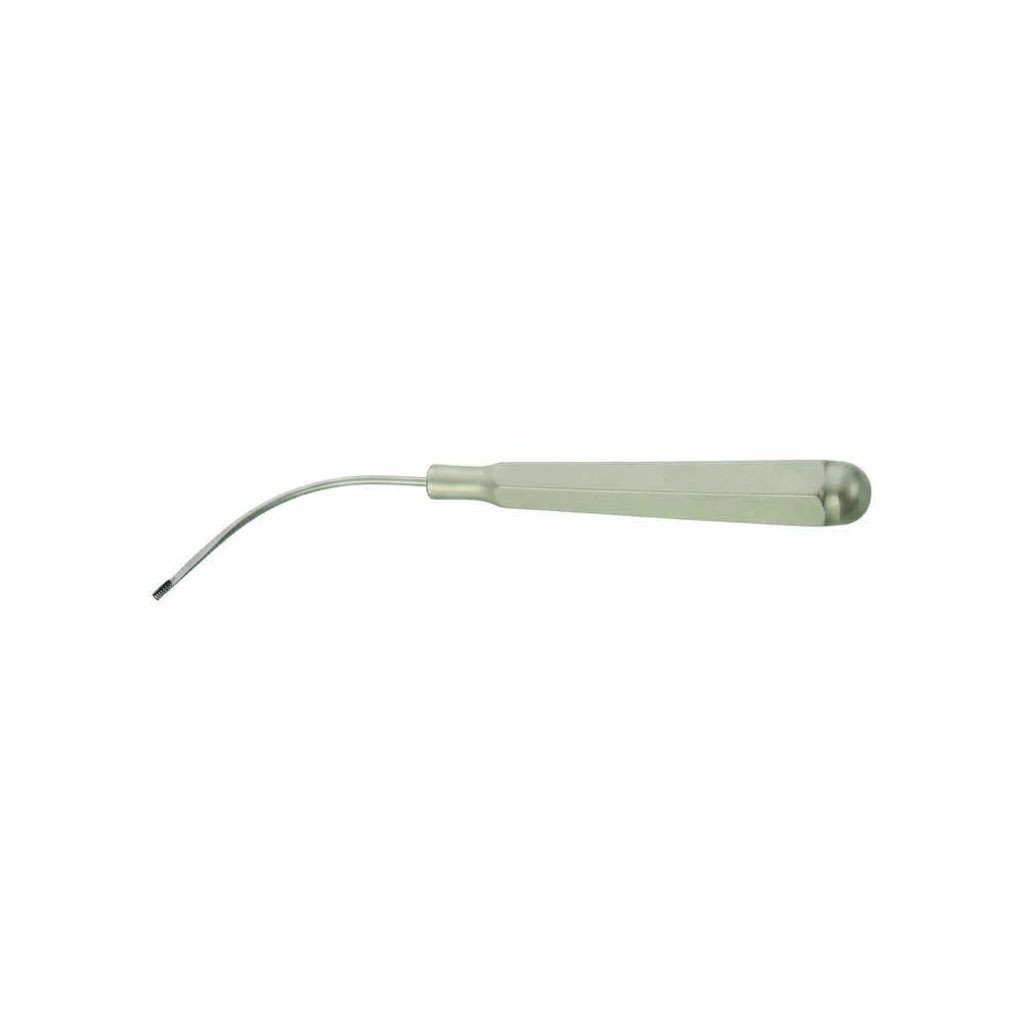
Tooth count and tooth fineness together set how fast an abrading instrument cuts, and both are chosen here for restraint rather than efficiency. Ten fine teeth take a small amount of bone per stroke, so the surgeon shapes by accumulating passes and can stop at any point. A coarser file would reach the same contour in a fraction of the strokes, but each of those strokes commits more bone than can be judged in advance.
That matters in the ear because the structures being worked around are millimetres from the ones that must not be touched, and bone once removed cannot be replaced. Fine teeth also leave a smoother surface, which is the actual objective when a canal or a bony margin is being contoured rather than simply reduced. At 15 cm the instrument reaches into the canal while remaining short enough to be controlled from the fingers.
Specifications
| Pattern | Dingman otobrader |
| Overall length | 15 cm |
| Teeth | 10, fine |
| Use | Bone abrasion and shaping in otologic and reconstructive surgery |
| Material | German stainless steel |
| Autoclavable | Yes |
| SKU | NJM-14704 |

Reviews
There are no reviews yet.