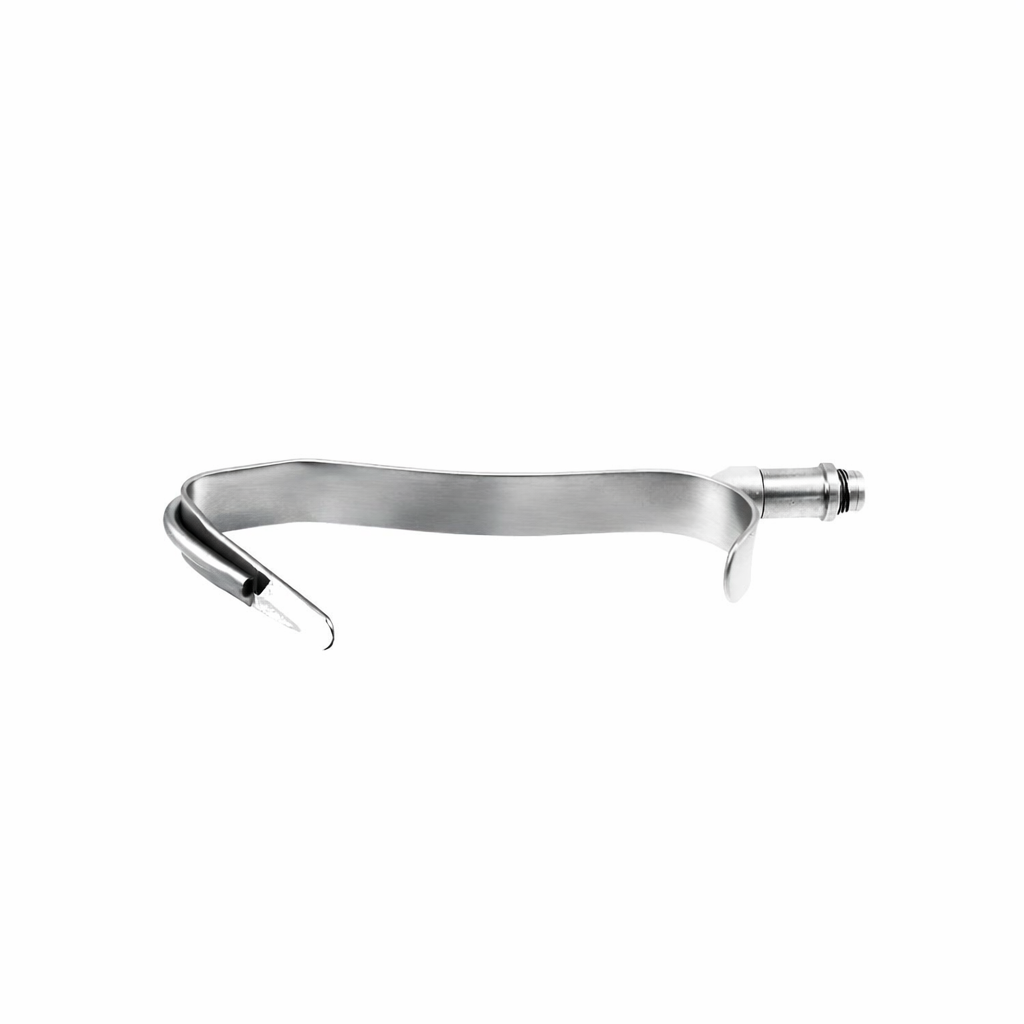
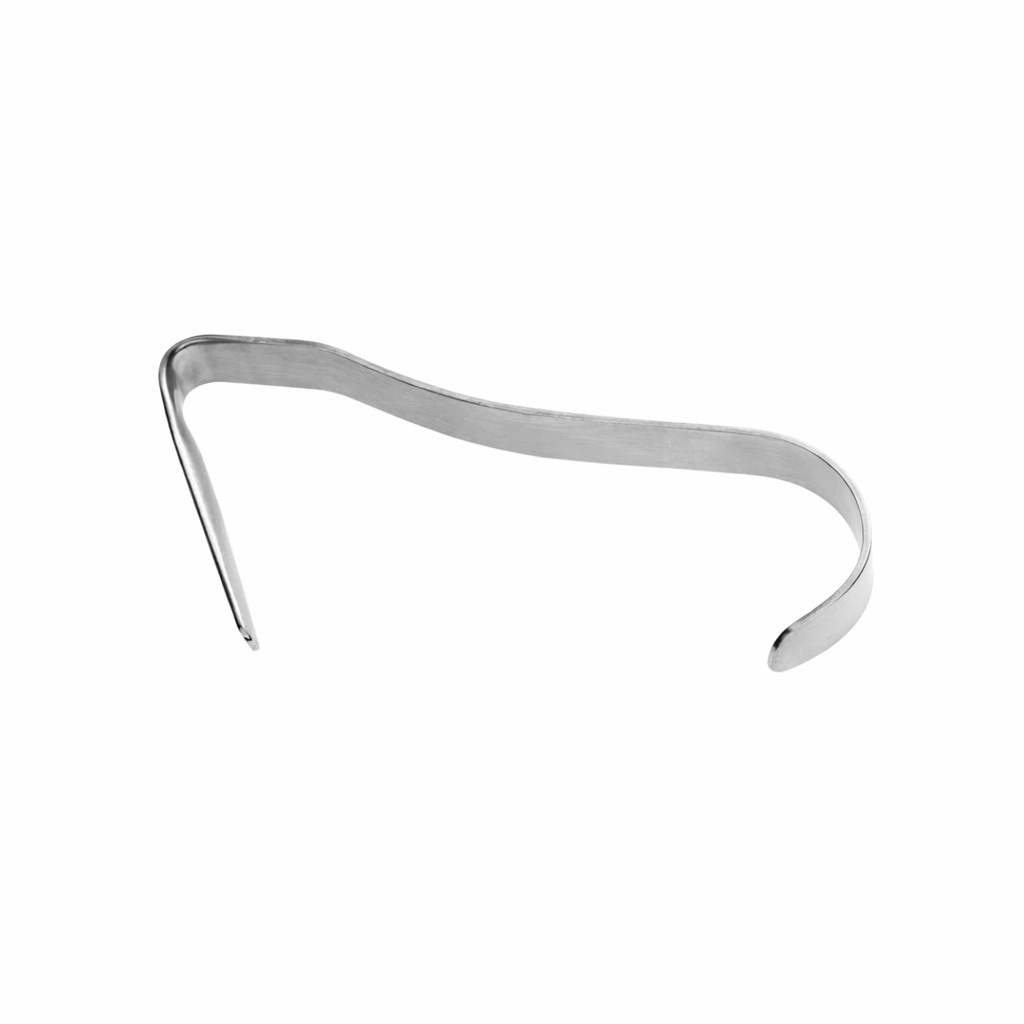
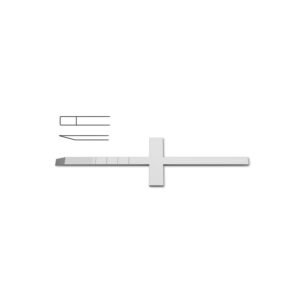
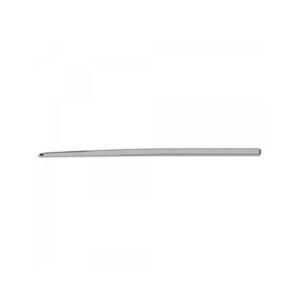
A concave blade holds the nasal sidewall in something close to its natural curve. A flat blade pressed against the same tissue straightens it, and the surgeon is then judging dorsal lines and tip position against an artificially flattened shape — which will spring back the moment the retractor comes out. A blade curved to match the anatomy holds the tissue clear without redefining it.
The taper along the 49 mm blade lets one instrument work at two scales. The narrower end enters a limited opening early in the procedure; advancing further brings the wider part into play as the exposure develops. Contact is also spread along the curve rather than concentrated at two edges, which matters where the blade bears on thin nasal skin for the length of an operation.
Specifications
| Pattern | Converse nasal retractor |
| Overall length | 11 cm (4¼”) |
| Blade | 49 mm, tapered and concave |
| Use | Exposure in nasal and rhinoplasty procedures |
| Material | German stainless steel |
| Reusable | Yes |
| Autoclavable | Yes |
| SKU | NJM-14685 |
Reviews
There are no reviews yet.