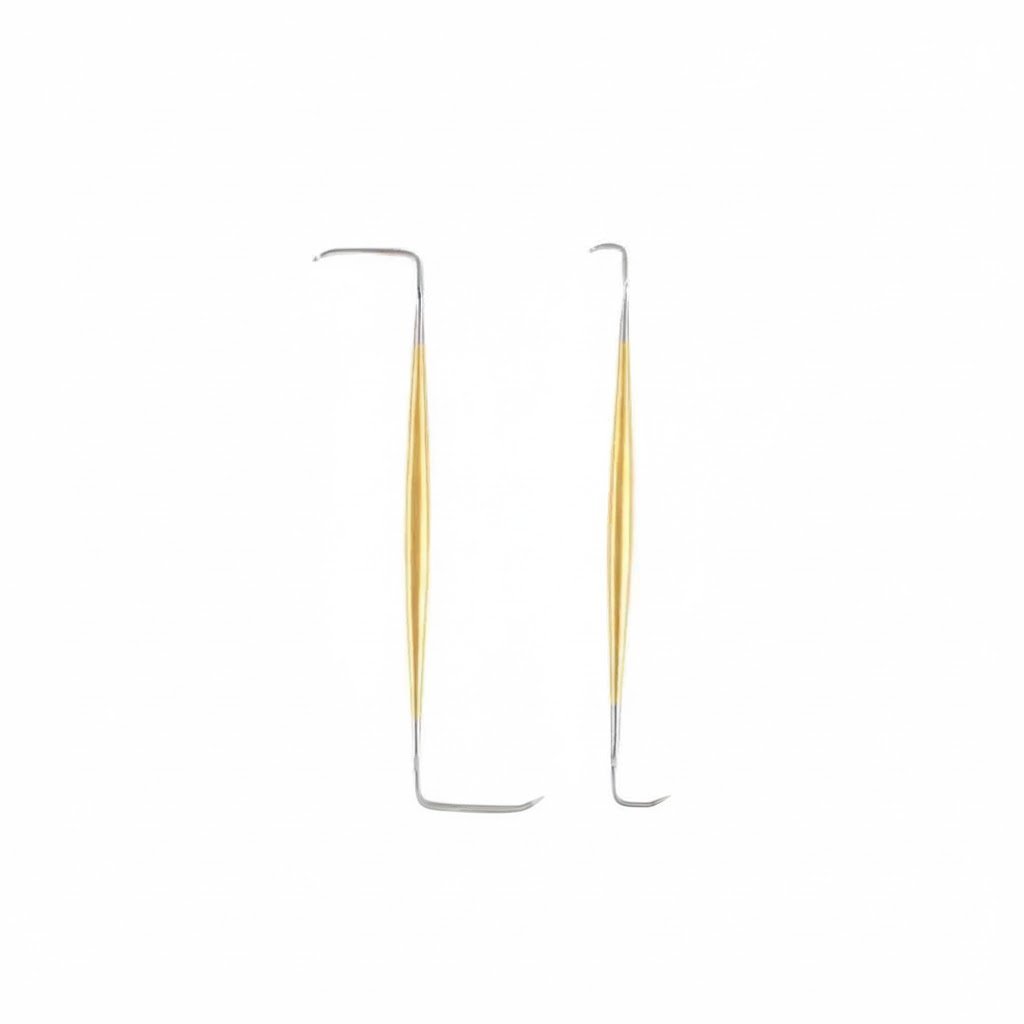
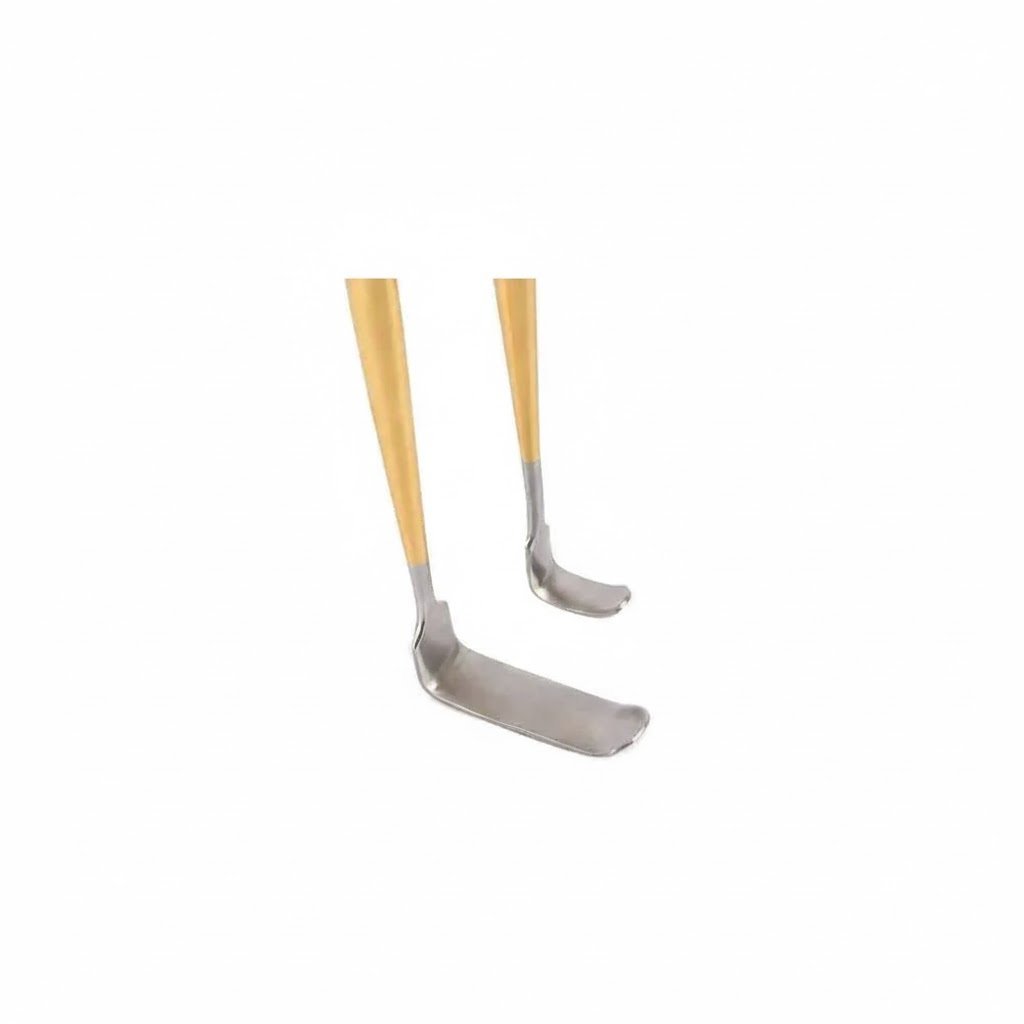
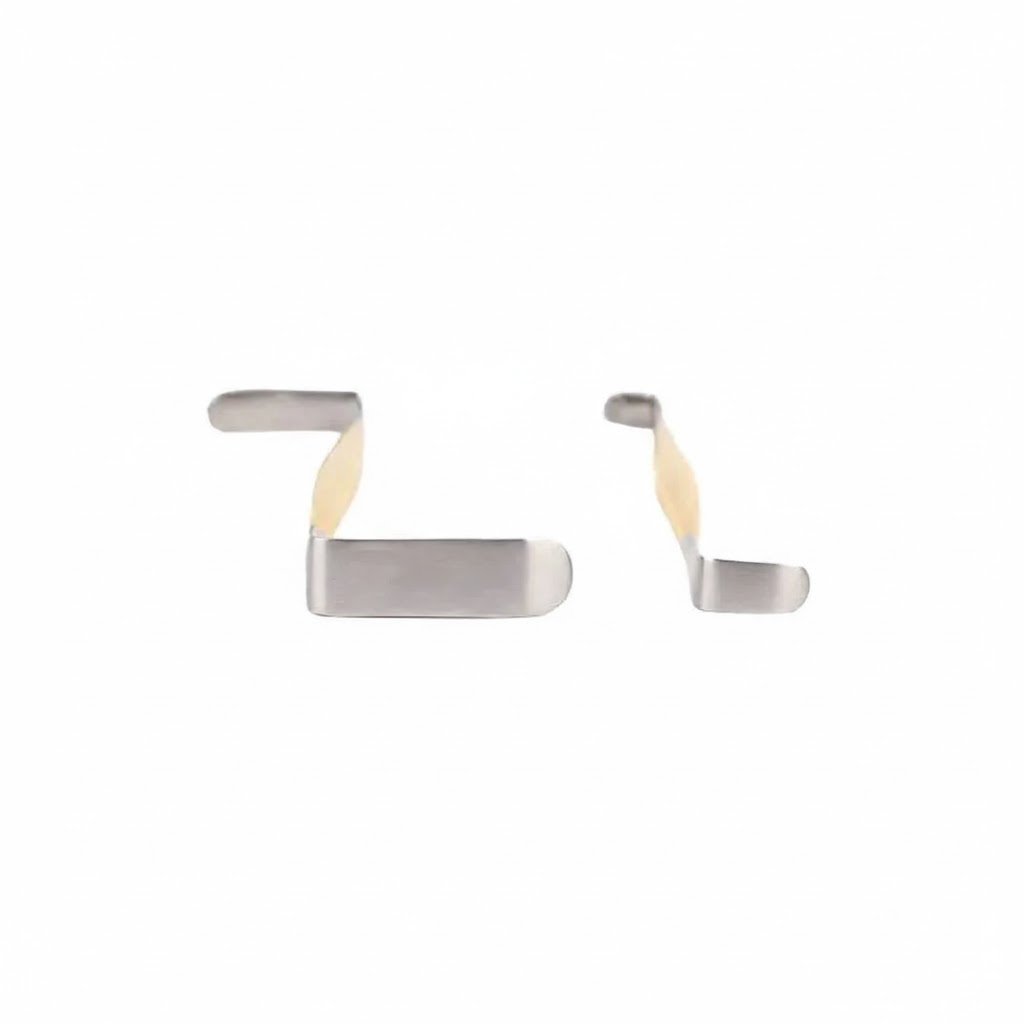
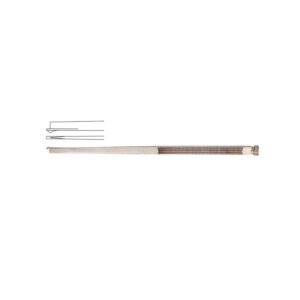
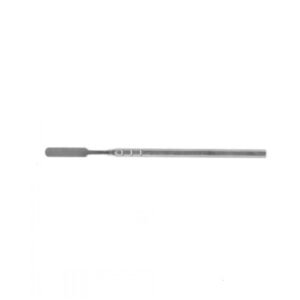
Each version carries two blade sizes because a rhinoplasty needs different amounts of exposure at different stages, and the difference between them is a matter of a few millimetres. Early in the dissection a small blade slips through a closed or limited incision without stretching it; later, once the framework is exposed and the flap is elevated, a larger blade holds a wider field open so the dorsum and tip can be assessed as a whole.
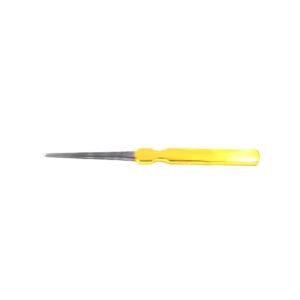
The two versions then cover different scales of work. The small pattern, at 10 × 7 mm and 15 × 7 mm, is for the tip and columella where the space genuinely is only millimetres across. The large, at 30 × 8 mm and 35 × 10 mm, holds the full soft tissue envelope clear of the dorsum. The gold-plated handle distinguishes the instrument at a glance among the similar-looking elevators and retractors laid out beside it.
Specifications
| Pattern | Cerkes double-ended nasal retractor |
| Overall length | 15 cm |
| Small version | 10 × 7 mm and 15 × 7 mm blades |
| Large version | 30 × 8 mm and 35 × 10 mm blades |
| Handle | Gold-plated |
| Use | Tissue exposure in rhinoplasty |
| Material | German stainless steel |
| SKU | NJM-14679 |
Reviews
There are no reviews yet.