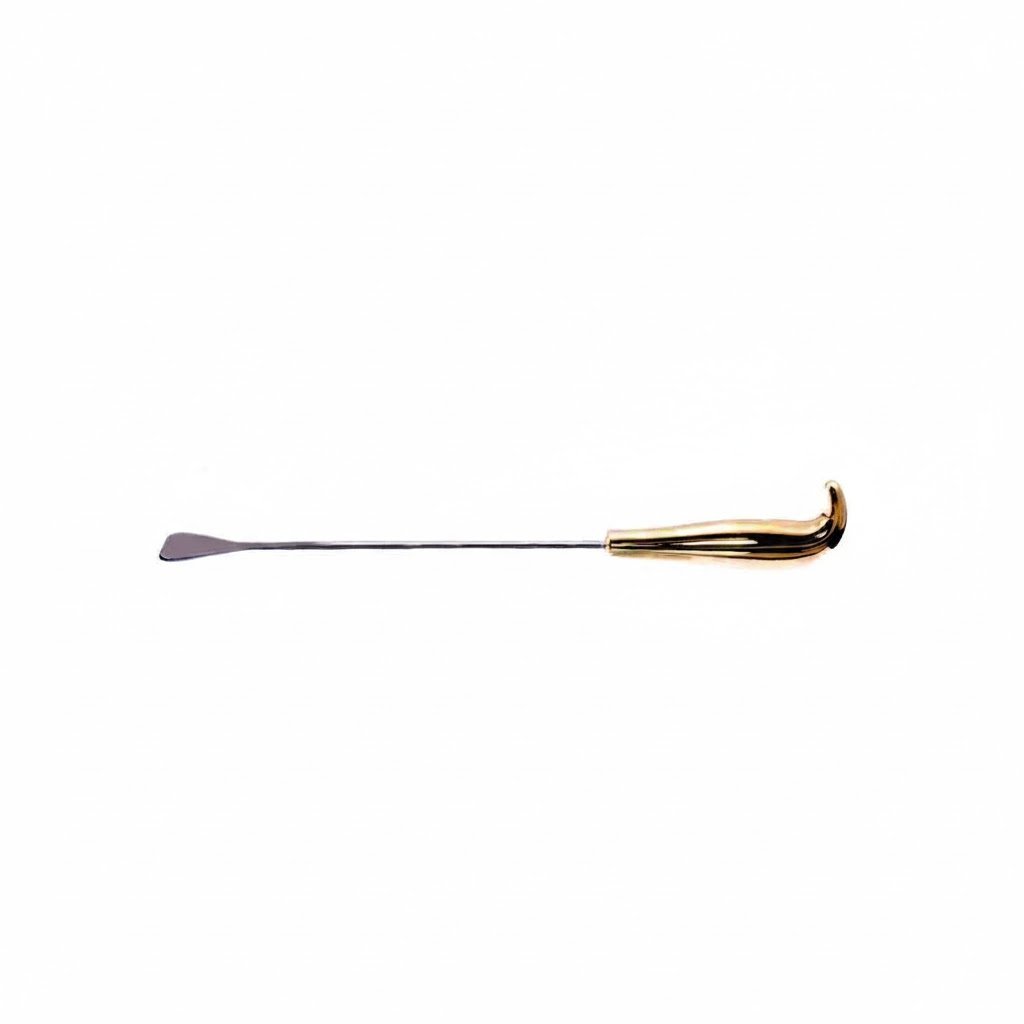
The ratio between overall length and working length is the specification that matters on a pocket dissector. 220 mm of working length inside a 33 cm instrument leaves roughly 11 cm of shaft outside the wound — enough for a full grip with the hand clear of the incision, while still reaching the far margin of a subpectoral pocket. Too little grip and the surgeon ends up holding the instrument at the point where it enters the skin, with no leverage and a hand blocking the view.
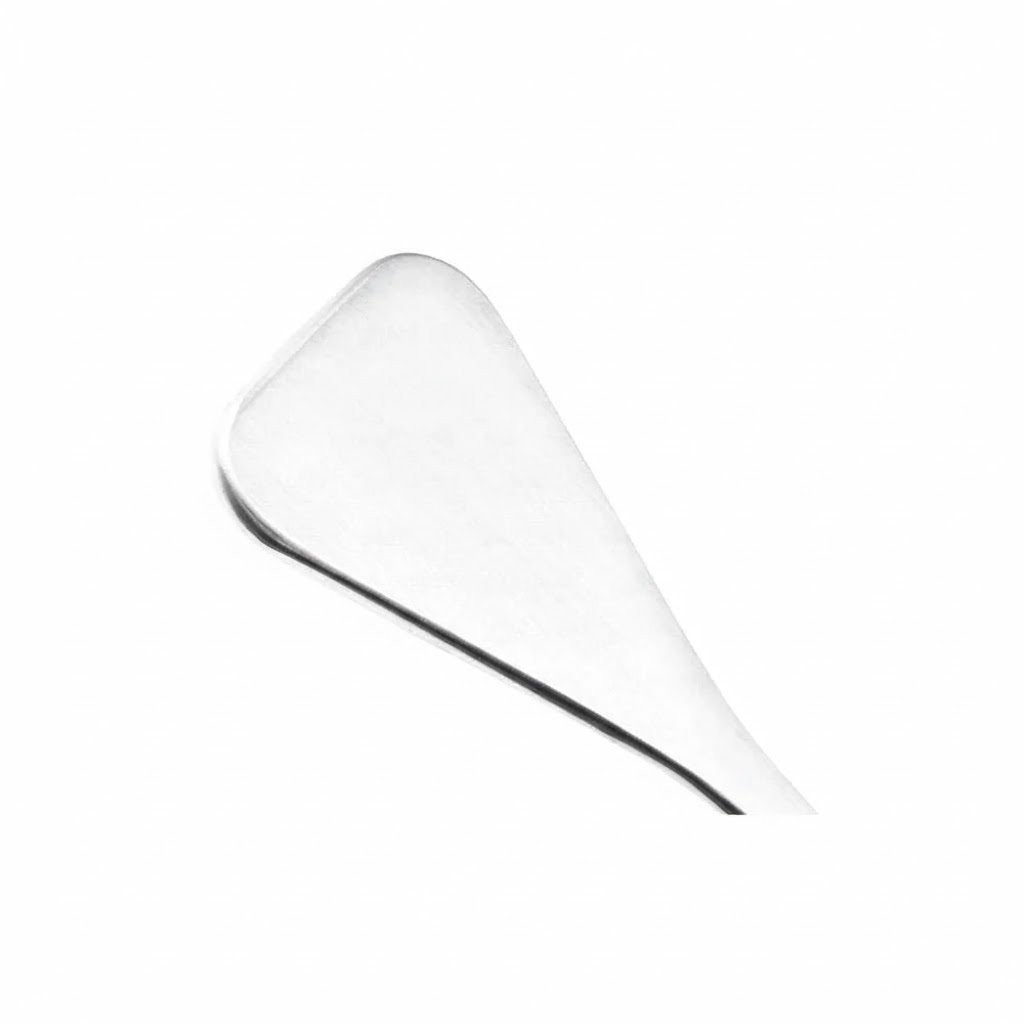
Rigidity is the other half of it. At this length a dissector is a long lever, and force applied at the handle must arrive at the tip rather than being absorbed in shaft flex. A stiff shaft also reports back — the change in resistance as the tip passes from loose areolar plane into denser tissue is the surgeon’s only signal that the dissection has left the intended layer, and a flexible instrument dampens exactly that signal. The spatulated tip spreads release across a broad flat front.
Specifications
| Pattern | Tebbetts-style breast dissector |
| Overall length | 33 cm (13″) |
| Working length | 220 mm |
| Tip | Spatulated |
| Use | Breast reconstructive and aesthetic pocket dissection |
| Material | German stainless steel |
| Autoclavable | Yes |
| SKU | NJM-14654 |
Reviews
There are no reviews yet.