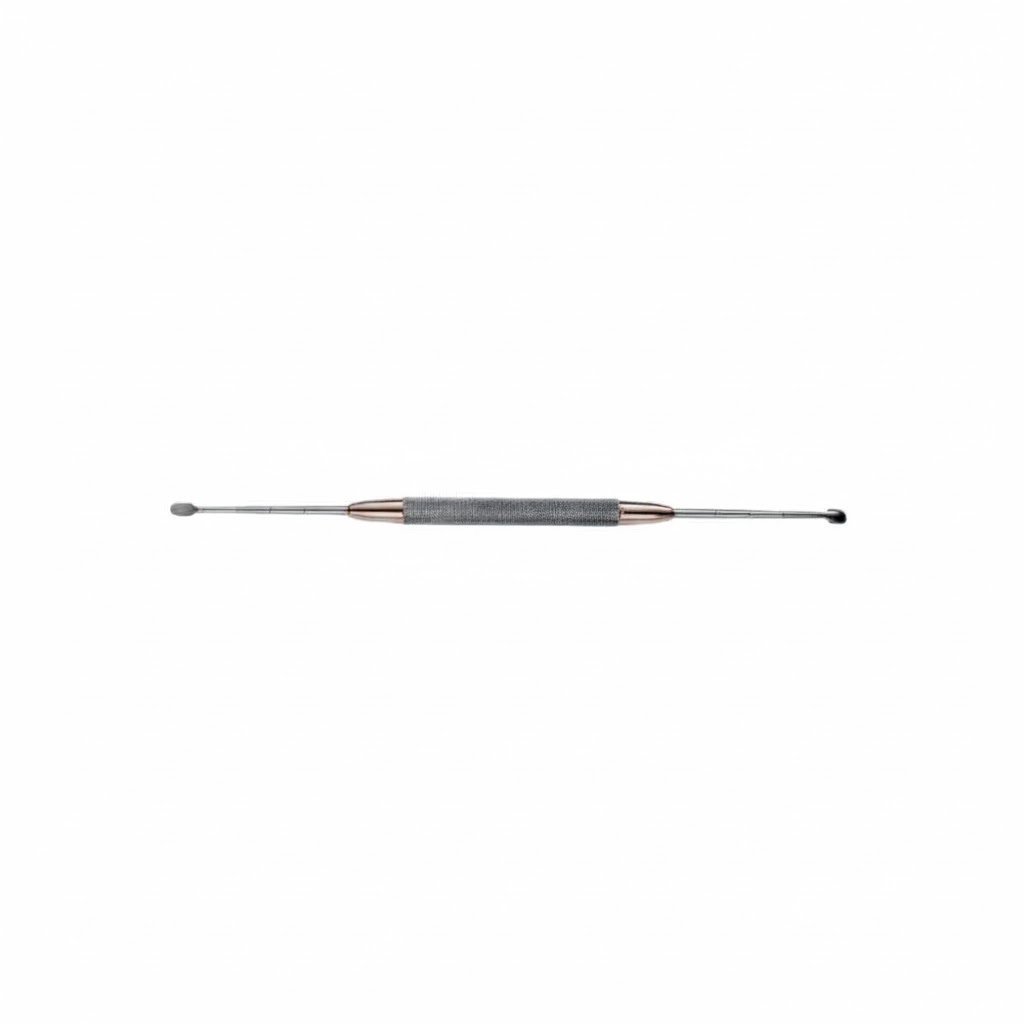
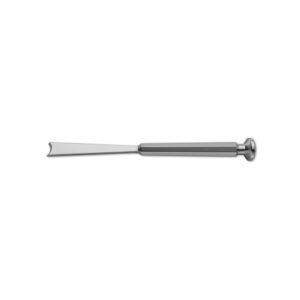
Most septal flap damage happens in the first second of the dissection, not during it. If the tip enters at the wrong depth it starts a plane inside the perichondrium rather than beneath it, and every millimetre after that follows the wrong layer — by the time the error is obvious the flap is already thinned or torn. The tip geometry here is shaped to seat at the correct interface as it is introduced, so the plane starts right.
The round handle then keeps it right across the septum. The septal surface has to be worked at a range of angles, and both sides of the septum are elevated with the same instrument; a round handle rolls in the fingers so the blade can be turned to face either side, or angled to follow the surface, without the surgeon regripping. At 21 cm the elevator carries that control back to the posterior septum while the hand stays clear of the nostril.
Specifications
| Pattern | Tebbets septal elevator |
| Overall length | 21 cm (8¼”) |
| Handle | Round |
| Use | Septal mucoperichondrial flap and periosteal elevation |
| Material | German stainless steel |
| Autoclavable | Yes |
| SKU | NJM-14649 |
Reviews
There are no reviews yet.