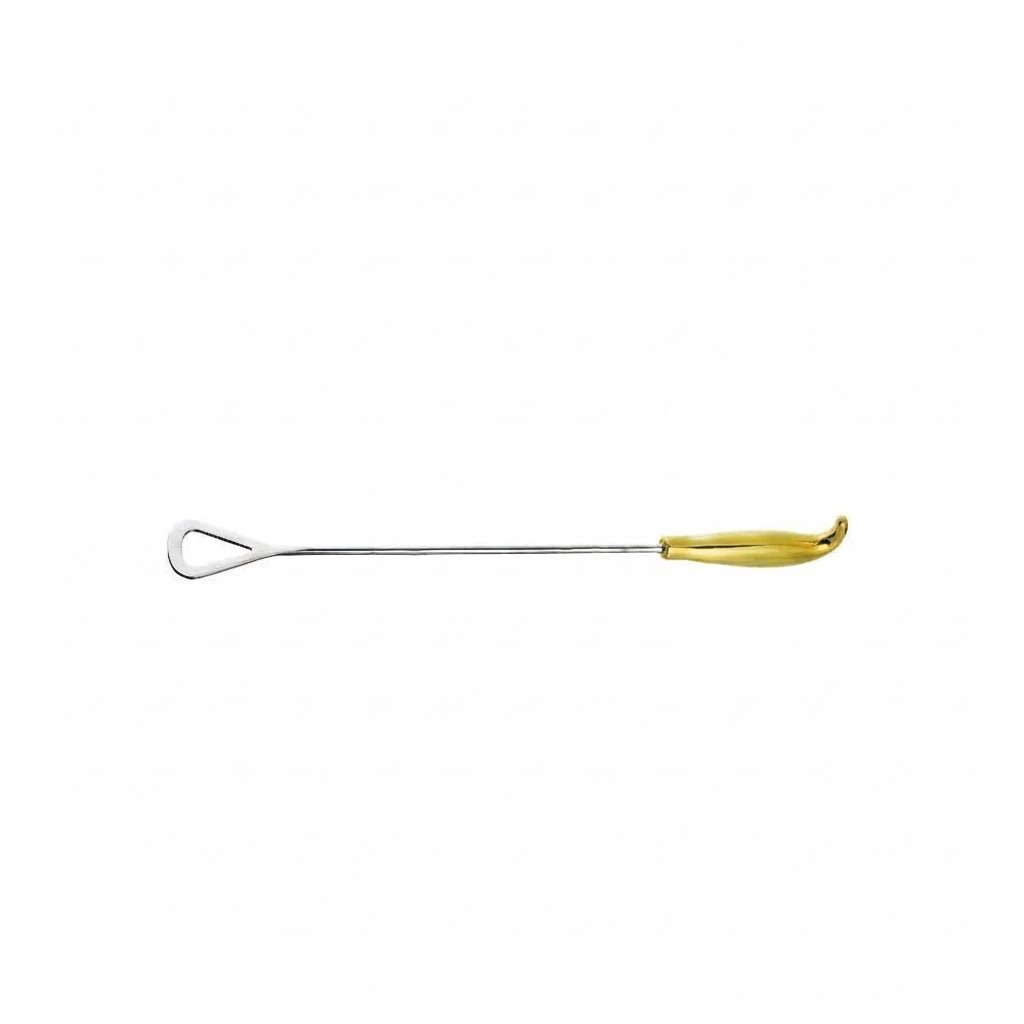
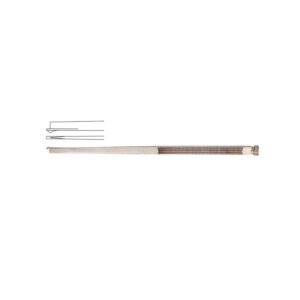
Transaxillary dissection is done blind — the pocket is far beyond anything visible through an axillary incision, so the surgeon reads the plane entirely through the instrument. A solid blade transmits only a general resistance. A fenestration changes that: tissue bulges slightly into the opening and grips the blade edge, and how much it does so differs markedly between the loose areolar plane the dissector should be in and the denser tissue either side of it.
So the window is a sensor rather than a weight-saving feature. It tells the surgeon they have strayed above or below the intended layer before the dissection has gone far enough to matter, which is the difference between a clean pocket and one that has to be revised. The 38.0 mm tip still sweeps a broad front, and 39.4 cm of length spans from the axilla to the far edge of the pocket with the hand outside the wound.
Specifications
| Pattern | Reynolds transaxillary breast dissector |
| Overall length | 39.4 cm (15½”) |
| Tip | Fenestrated, 38.0 mm wide |
| Use | Breast augmentation and reconstructive dissection |
| Material | German stainless steel |
| Reusable | Yes |
| Autoclavable | Yes |
| SKU | NJM-14645 |
Reviews
There are no reviews yet.