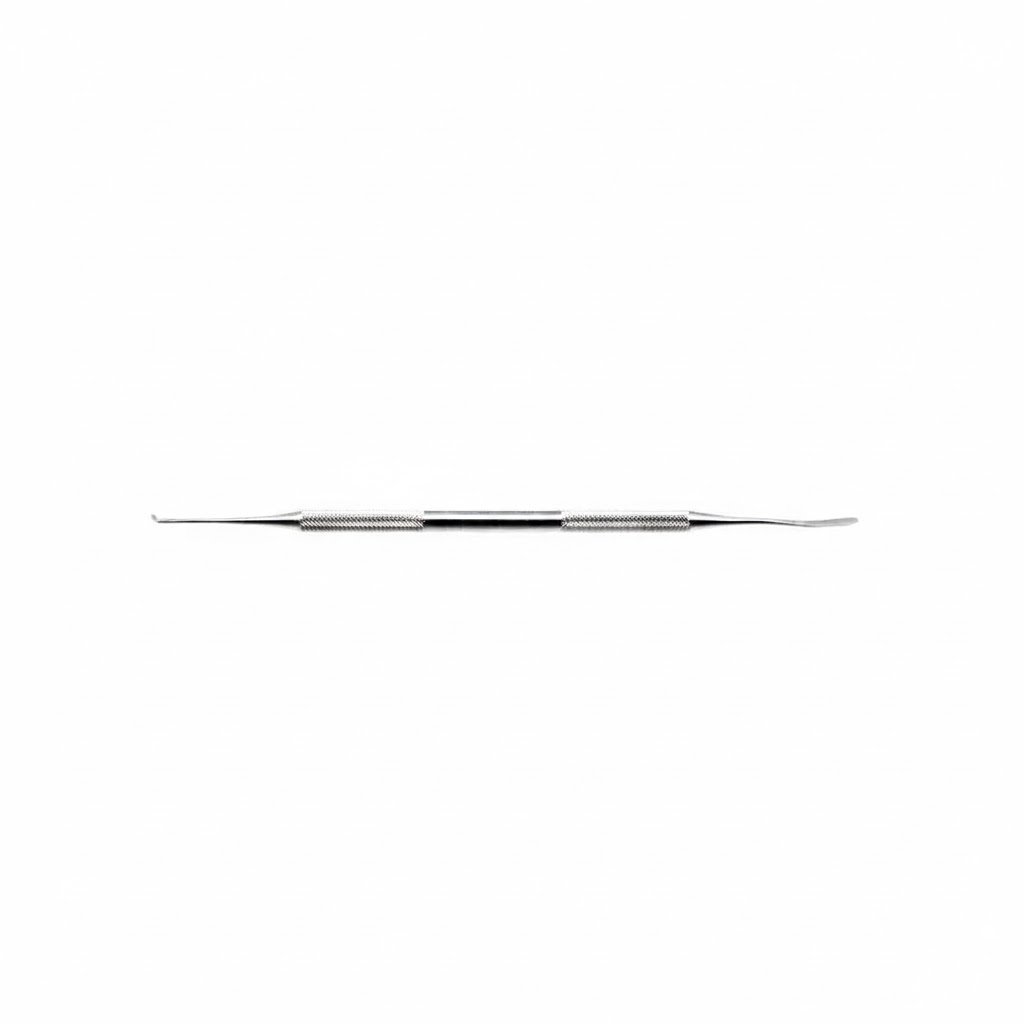
The 45° angle on the round tip is what this elevator is chosen for. A straight tip can only work a surface it can meet head-on; angle the approach and the tip lifts away from the bone, losing the plane. Setting the tip at 45° to the shaft lets the working edge stay flat against bone while the handle sits clear of the tissue in front of it — the standard problem when elevating around the curve of the nasal dorsum or under a bony ledge.
The opposite end is a straight 2.75 mm sharp elevator for the parts of the same dissection that can be reached directly, where the angled tip would be an obstruction rather than a help. Having both on one instrument matters because these two situations alternate constantly within a single procedure. Both tips are sharp: unlike periosteal elevators that lift a broad layer bluntly, this pattern is meant to start the plane, and a sharp edge is what establishes the separation before a wider blade continues it.
Specifications
| Pattern | McCollough double-ended elevator |
| Overall length | 18.5 cm (7¼”) |
| Tip 1 | 3.0 mm round sharp tip, angled 45° |
| Tip 2 | 2.75 mm sharp elevator tip |
| Material | German stainless steel |
| Autoclavable | Yes |
| SKU | NJM-14641 |
Reviews
There are no reviews yet.