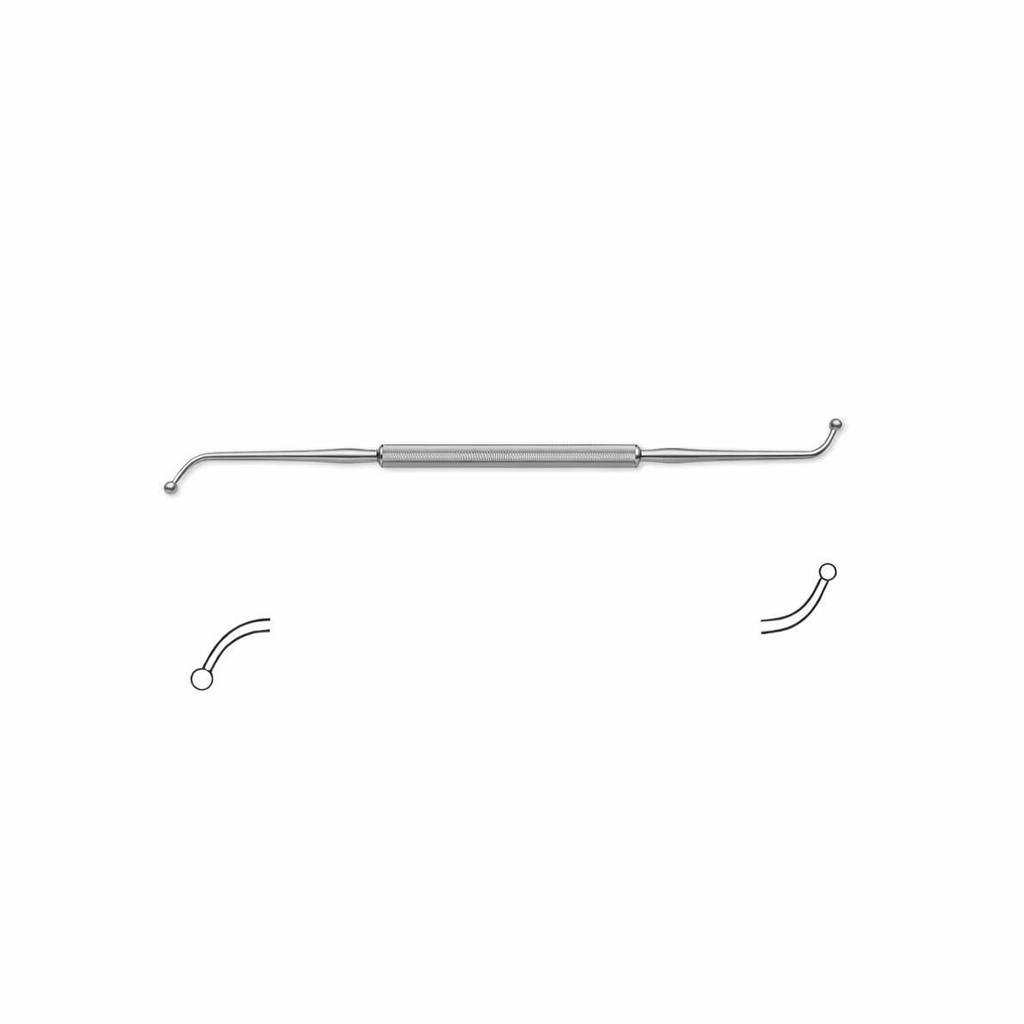
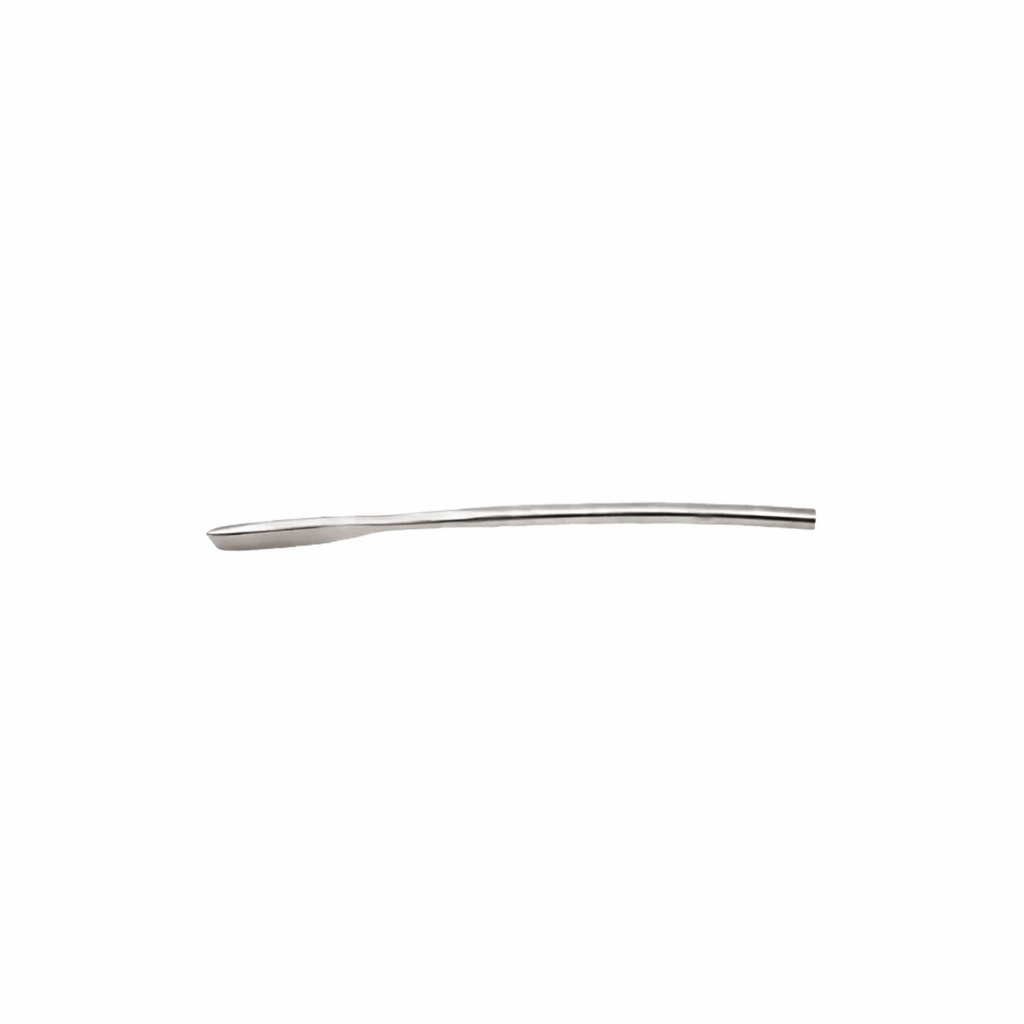
A ball tip is the most atraumatic shape an elevator can end in. Every flat blade, however blunt, still has a perimeter — an edge and two corners — and those corners are where a mucoperichondrial flap catches and tears when the angle is slightly wrong. A sphere presents the same rounded surface in every direction, so there is no orientation in which it can score cartilage or snag the flap, and no need to keep it aligned to a plane.
That makes it the instrument for the moments when the standard elevator becomes risky: working across a spur, thinning cartilage where the flap is already fragile, or completing a dissection where a previous operation has left the layers scarred together. The 2.0 mm and 2.5 mm tips are small because the technique is local — a ball tip does not lift a broad band the way a blade does, it works a difficult few millimetres at a time. Both sizes on one 19 cm shaft cover the range of those situations.
Specifications
| Pattern | Kistner septum ball end elevator, double-ended |
| Overall length | 19.0 cm (7½”) |
| Tips | Ball, 2.0 mm and 2.5 mm |
| Use | Atraumatic mucoperichondrial flap elevation |
| Material | German stainless steel |
| Autoclavable | Yes |
| SKU | NJM-14632 |
Reviews
There are no reviews yet.