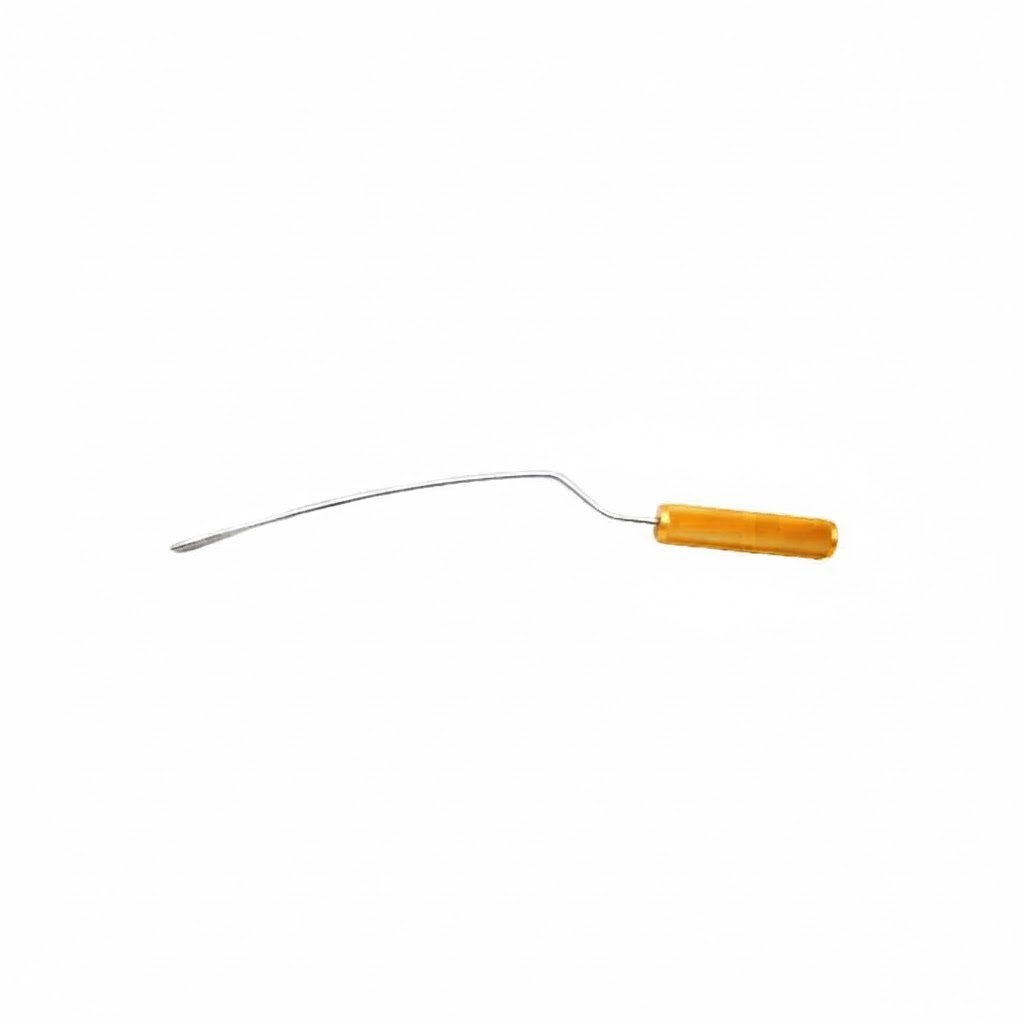
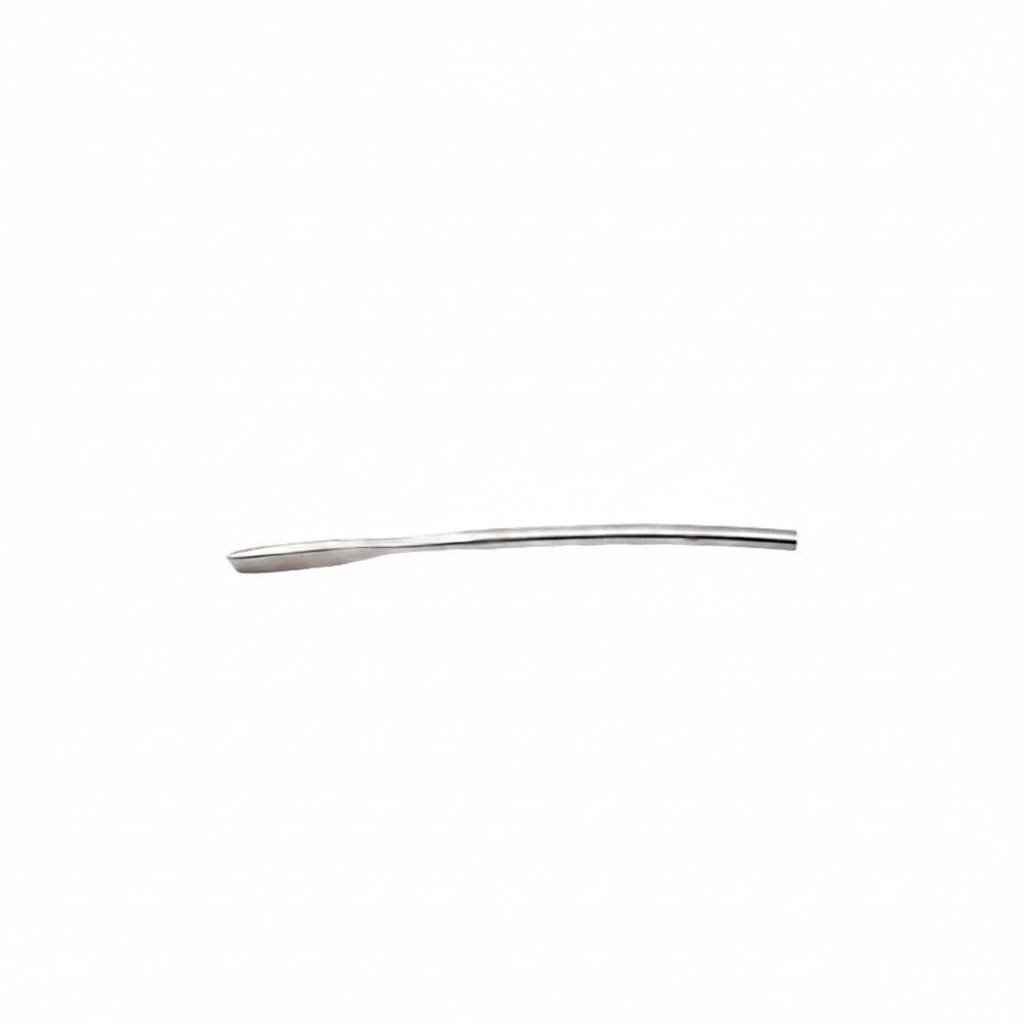
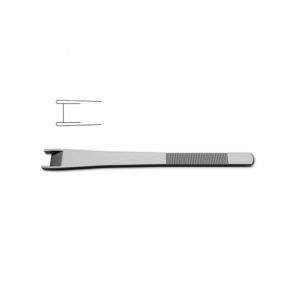
Everything about this instrument follows from where the incision is. In a transaxillary approach the surgeon enters through the armpit and creates the implant pocket behind the breast — so the entry point and the operative site are separated by the whole width of the chest wall, with no direct line between them. 432 mm of length is what spans that distance, and the curve is what turns the corner from the axilla down and forward into the pocket. A straight instrument of the same length would simply point the wrong way.
The 13 mm blade is broad because the job is creating a pocket, not finding a plane. Once the correct layer is entered, the dissector sweeps to release tissue over a wide area, and a wide blade does that in fewer passes with less chance of straying into a different plane between strokes. The whole dissection is done by feel, since the working tip is far beyond what can be seen through an axillary incision — which is why the blade is blunt and the shaft rigid enough to report back what it meets.
Specifications
| Pattern | Jacobs transaxillary breast dissector |
| Overall length | 432 mm (17″) |
| Blade width | 13 mm (½”) |
| Shaft | Curved |
| Use | Transaxillary breast pocket dissection |
| Material | German stainless steel |
| Autoclavable | Yes |
| SKU | NJM-14630 |

Reviews
There are no reviews yet.