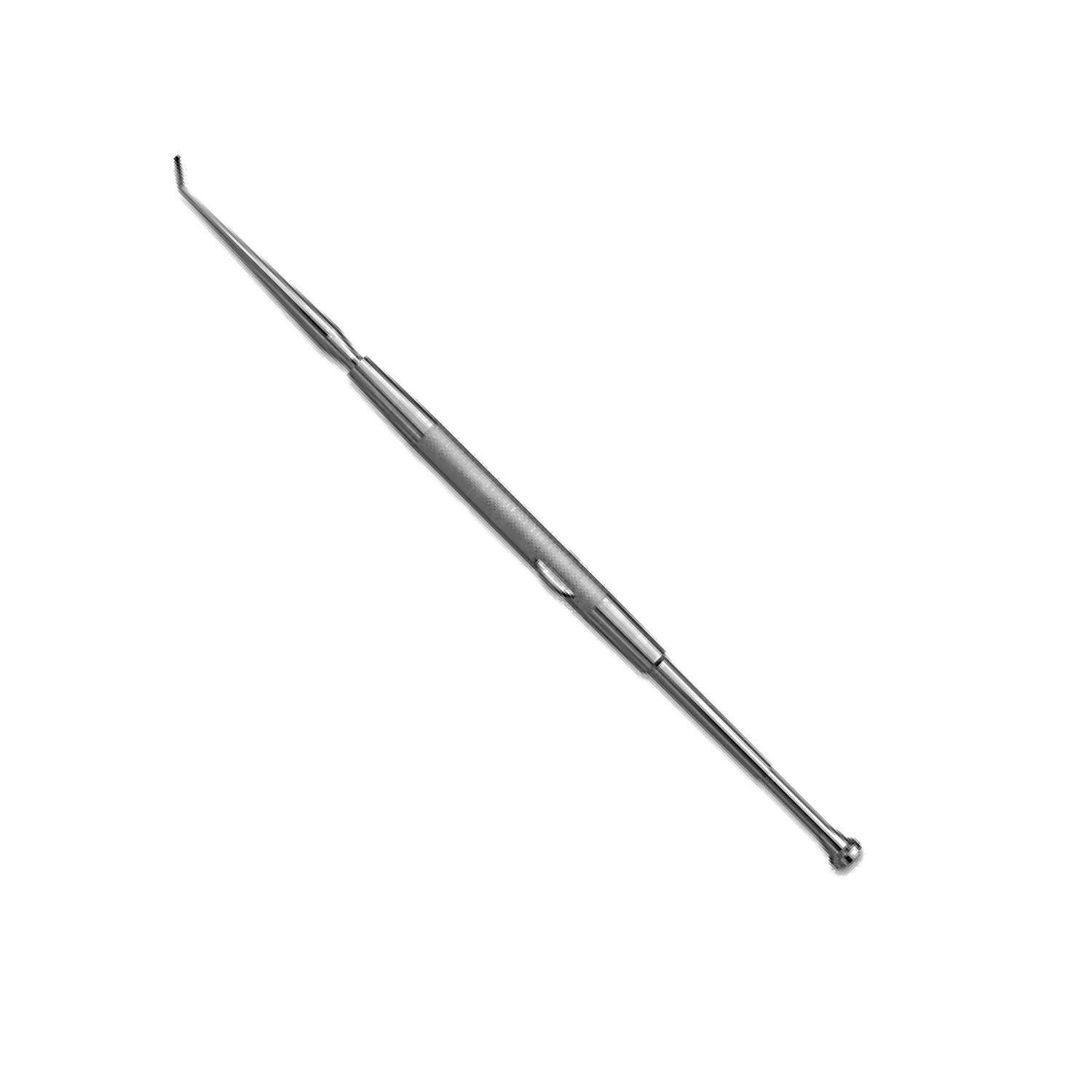
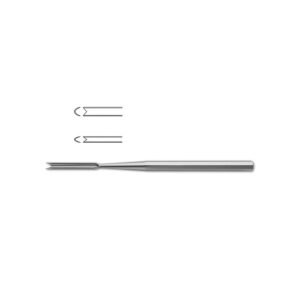
A hoe-shaped blade changes the direction the force is applied. On an in-line elevator the surgeon pushes the tip away, and all the control comes from restraining that push. A hoe is pulled back instead — the blade catches the tissue plane and the surgeon draws it toward themselves, which is a far more controllable movement because the arm is closing rather than extending and can be stopped instantly.
That matters most under a large flap where the working tip is out of sight. In breast reconstruction the dissector is advanced blind into a pocket and used to raise the flap off the tissue beneath; a pushing instrument that slips runs forward into structures the surgeon cannot see, while a pulling one slips back toward open space. The two blade sizes, 5.0 mm and 2.8 mm, let the same instrument work a broad plane and then the tighter margins at the pocket edge.
Specifications
| Pattern | Freer spatula dissector, hoe-shaped, double-ended |
| Overall length | 16.5 cm (6½”) |
| Blades | 5.0 mm and 2.8 mm |
| Use | Elevating soft tissue flaps in breast and plastic surgery |
| Material | German stainless steel |
| Autoclavable | Yes |
| SKU | NJM-14618 |
Reviews
There are no reviews yet.