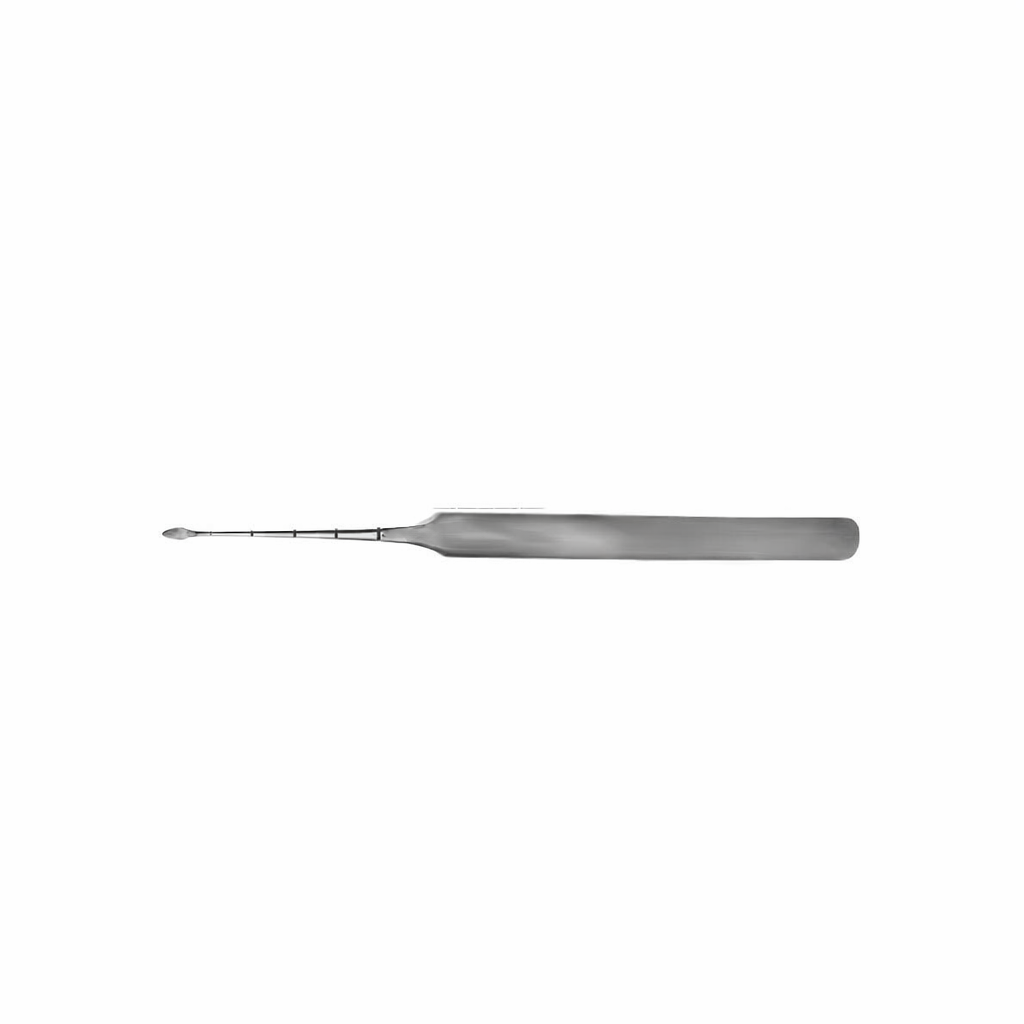
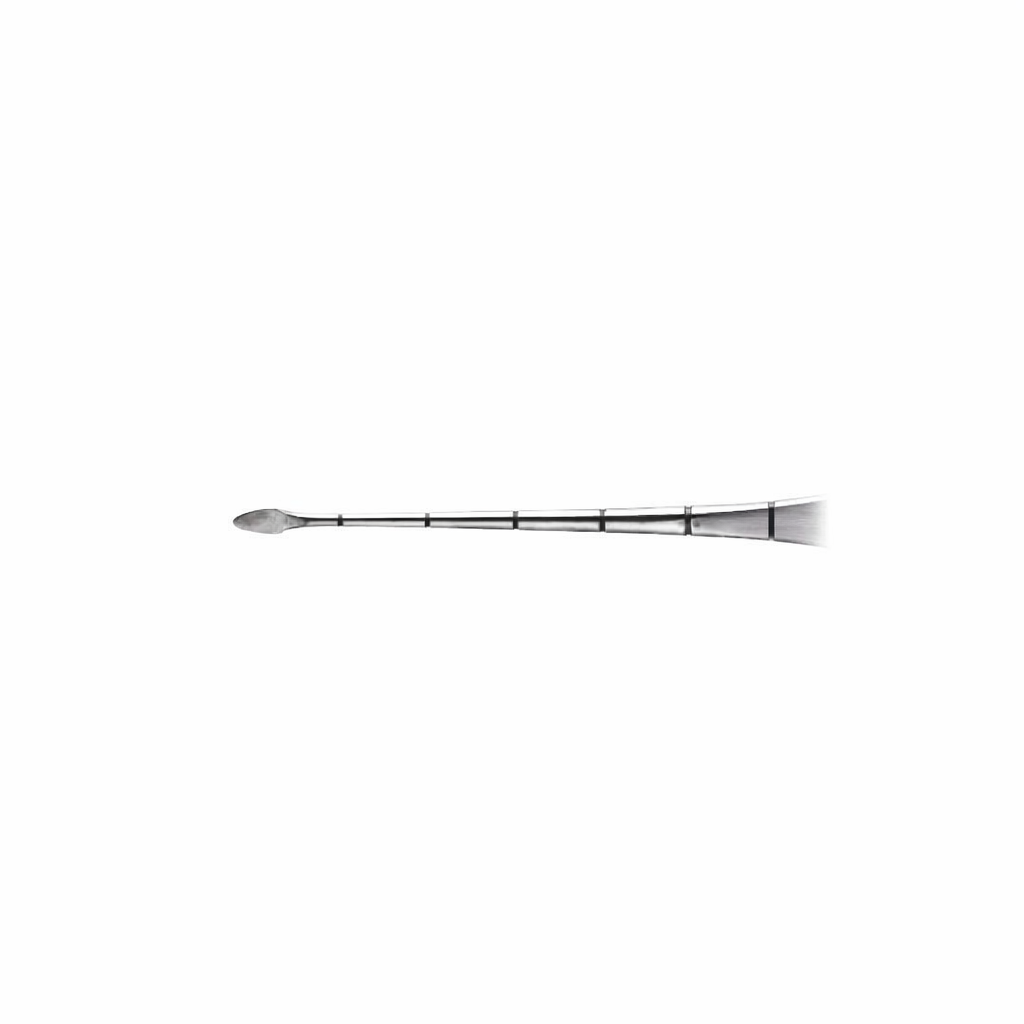
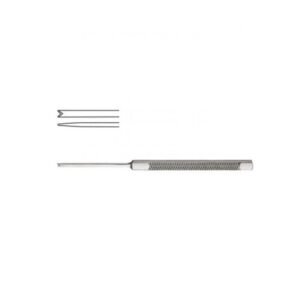
2.5 mm is a very narrow blade, and it is narrow because the space it enters barely exists until the instrument makes it. Mucoperichondrium is bonded to septal cartilage across its whole surface; the elevator has to find the interface at one point and open it outward from there. A wider tip cannot enter that interface at all and instead pushes into either the cartilage or the lining, which is how a septal perforation begins.
The flat handle keeps the blade in the plane once it is inside. The septum is a thin flat sheet, and the blade must stay parallel to it through the whole elevation — rotate a few degrees and the edge turns into the cartilage on one side or the mucosa on the other. Flats on the handle register against the fingers so the surgeon can feel the blade orientation without seeing it, which matters because most of this dissection happens out of direct view inside the nostril.
Specifications
| Pattern | Cottle nasal septum elevator |
| Overall length | 16.0 cm |
| Blade tip | 2.5 mm wide |
| Handle | Flat |
| Use | Elevating septal mucoperichondrium in rhinoplasty |
| Material | German stainless steel |
| Autoclavable | Yes |
| SKU | NJM-14603 |

Reviews
There are no reviews yet.