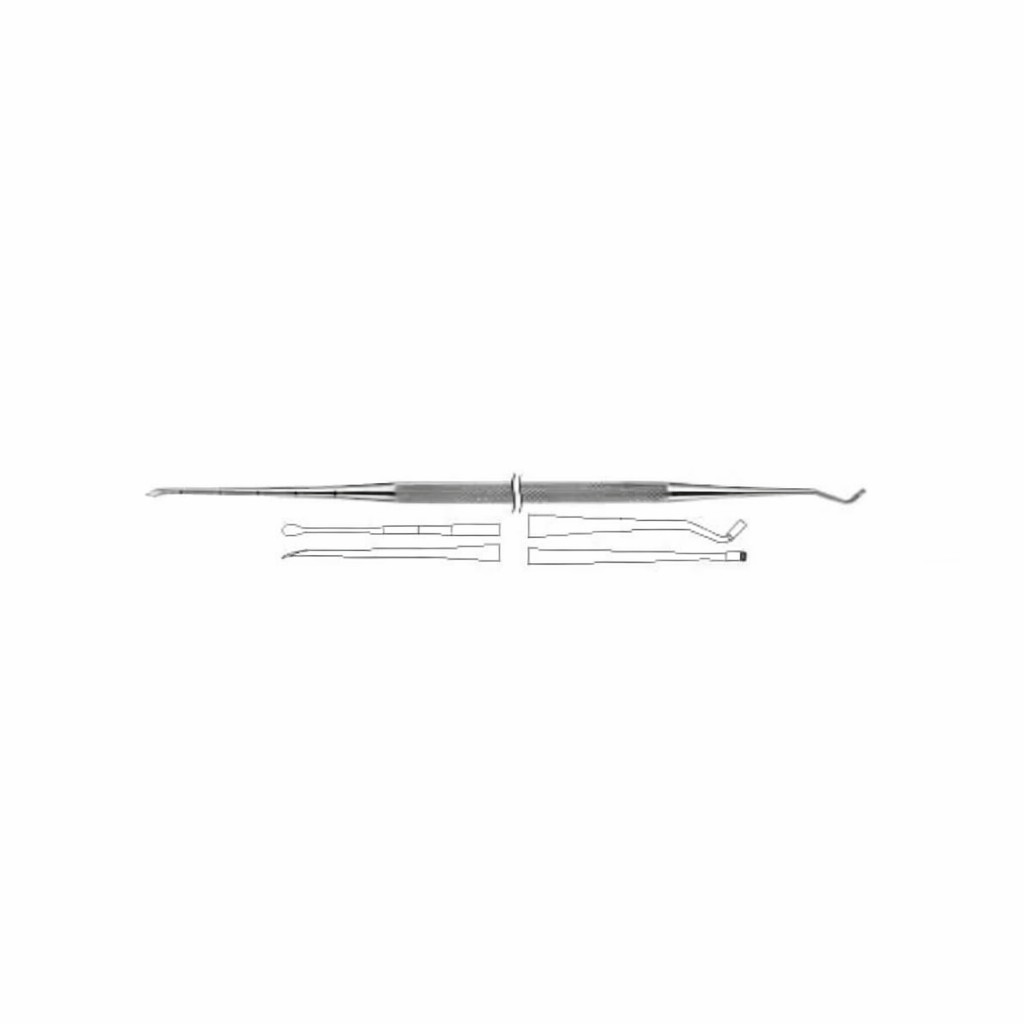
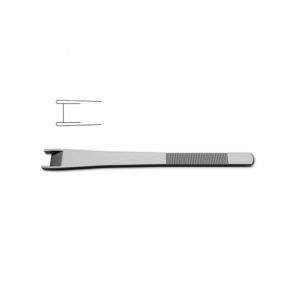
An elevator and a raspatory are often confused because they look alike and sit side by side in the same tray. The distinction is what they act on: an elevator lifts tissue off bone and leaves the bone untouched, while a raspatory works the bone surface directly, scraping away residual attachments and irregularities. In rhinoplasty both are needed in sequence — the dorsum is exposed first, then the bone beneath is cleaned and smoothed before any reshaping is judged.
Two working ends on one 21 cm shaft suit the way that sequence runs. The dissection along the nasal dorsum moves continuously between areas needing a different approach angle or a different amount of bite, and reversing an instrument is quicker and less disruptive than exchanging one in a field held open by retraction. The length places the surgeon’s hand below and behind the working tip, keeping the narrow view up the dorsum clear.
Specifications
| Pattern | Cottle Daniel raspatory, double-ended |
| Overall length | 21.0 cm |
| Use | Nasal reconstructive and rhinoplasty procedures |
| Material | German stainless steel |
| Reusable | Yes |
| Autoclavable | Yes |
| SKU | NJM-14601 |
Reviews
There are no reviews yet.