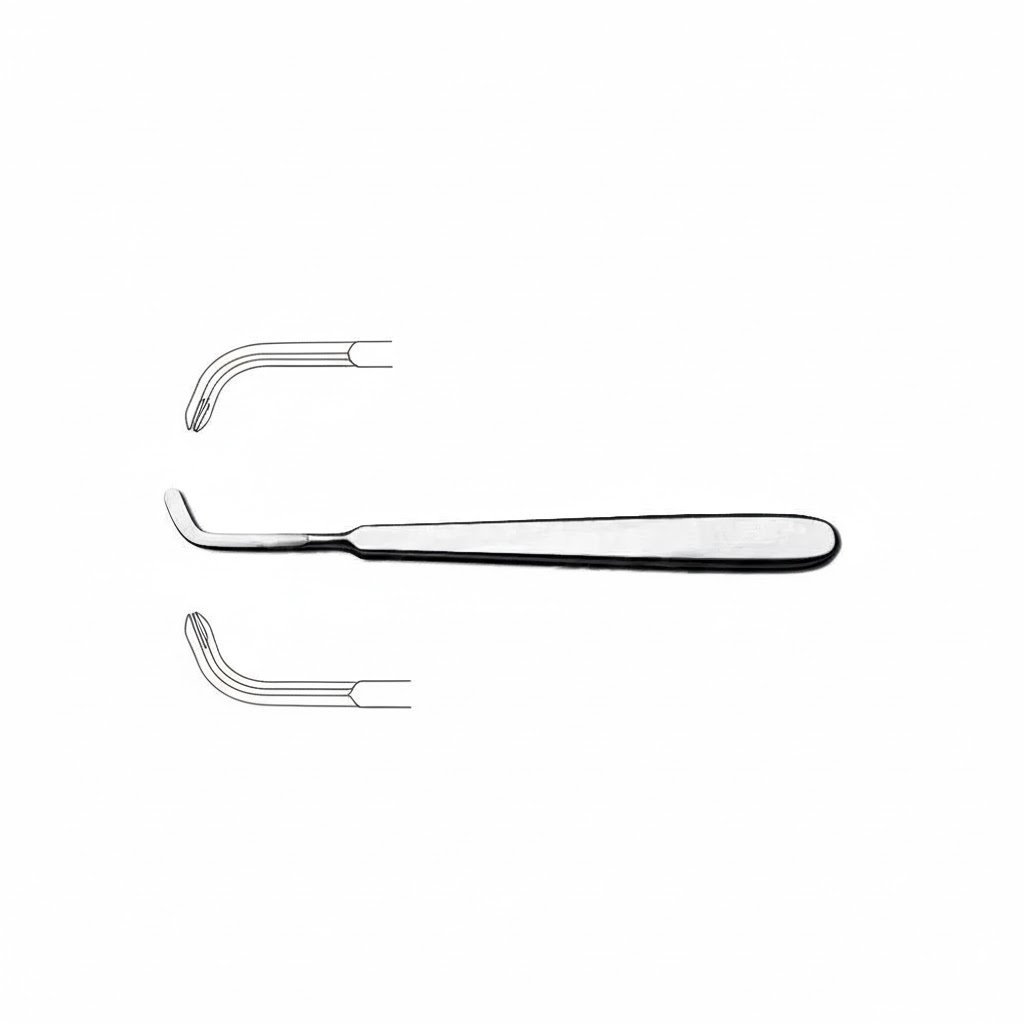
A rasp works differently from every elevator around it in the same tray. An elevator separates tissue from bone and leaves the bone as it found it; a rasp takes the bone itself away, in small amounts, by abrasion. That difference matters when a bony edge or ridge has to be reduced to a smooth contour — a chisel removes it in one committed cut, while a rasp lets the surgeon take a little, feel the result, and take a little more.
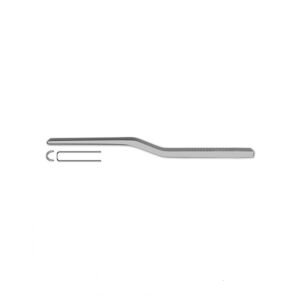
The upward curve of the tip points the abrading surface at the roof of the working space. In the palate and along the undersurface of the nasal dorsum, the bone that needs shaping is above the instrument, and a flat rasp would have to be tilted so far that only its corner would make contact. Curving the tip up presents the full 5.0 mm working face to that surface. The short 14 cm length keeps the stroke controlled, since rasping is a repeated back-and-forth movement where a long shaft would amplify every unintended excursion.
Specifications
| Type | Cleft palate rasp |
| Overall length | 14 cm (5½”) |
| Tip | 5.0 mm wide, curved up |
| Action | Bone removal by abrasion |
| Use | Palate reconstruction and nasal dorsum sculpting |
| Material | German stainless steel |
| Autoclavable | Yes |
| SKU | NJM-14595 |
Reviews
There are no reviews yet.