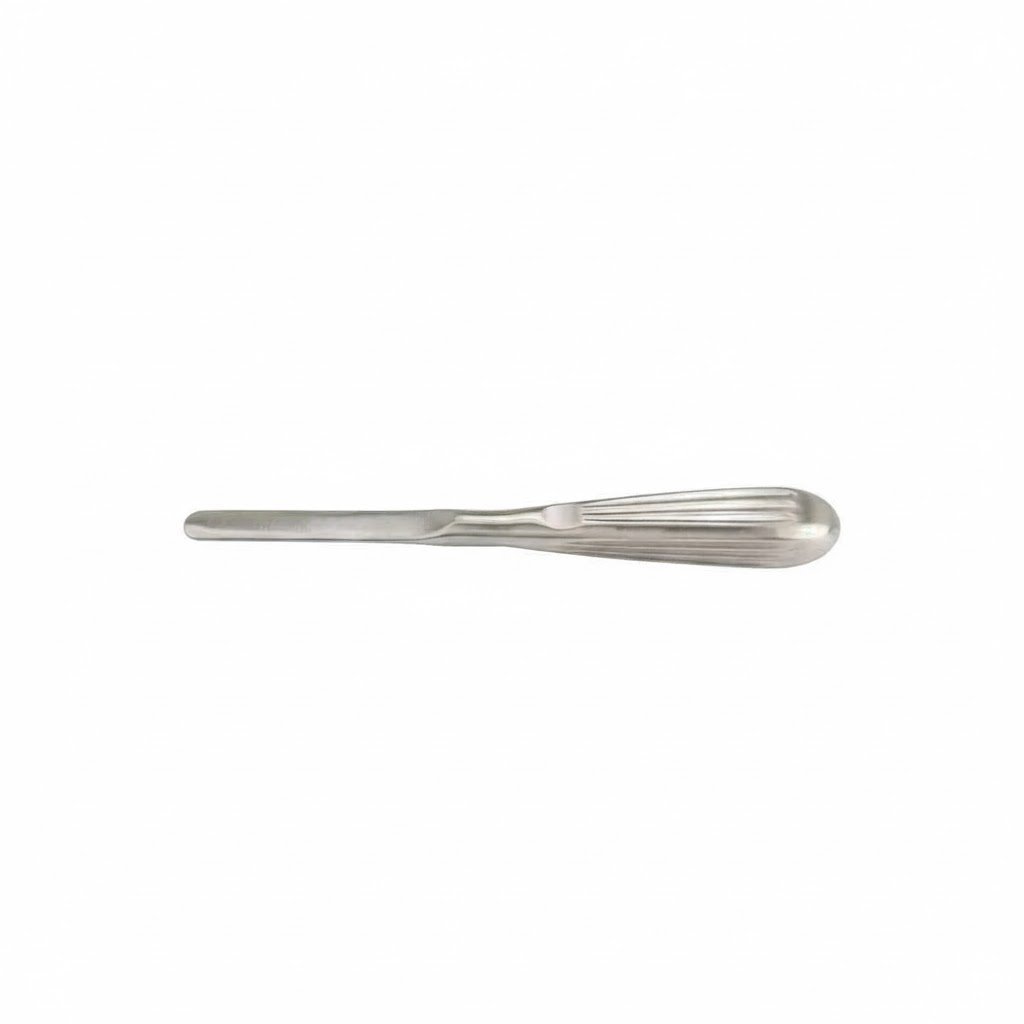
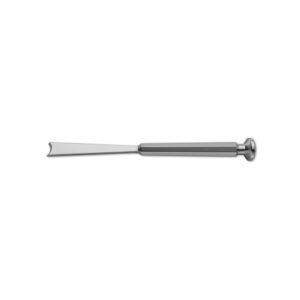
A heavy shaft is the whole point of this pattern. Reducing displaced nasal bones takes real force applied along a precise line, and a slender shaft flexes under that load — the instrument absorbs part of the push and springs, so the surgeon cannot tell how much force is reaching the bone or feel the moment the fragment moves. A stiff shaft transmits both the force and the feedback, and that feedback is how the endpoint of a closed reduction is judged, since the result cannot be seen directly.
The edges are blunt because the elevator works inside the nose against mucosa that must survive intact. It is introduced along the nasal floor and lifted against the undersurface of the depressed bone; a sharp edge in that position would cut the lining it slides against, and mucosal tearing during reduction is a direct route to adhesions and airway obstruction afterwards. The 9.0 mm blade spreads the lifting load over enough bone to move a fragment without perforating it.
Specifications
| Pattern | Boies nasal fracture elevator |
| Overall length | 19.0 cm (7½”) |
| Blade width | 9.0 mm |
| Edges | Blunt |
| Shaft | Heavy, for controlled reduction force |
| Material | German stainless steel |
| Autoclavable | Yes |
| SKU | NJM-14594 |
Reviews
There are no reviews yet.