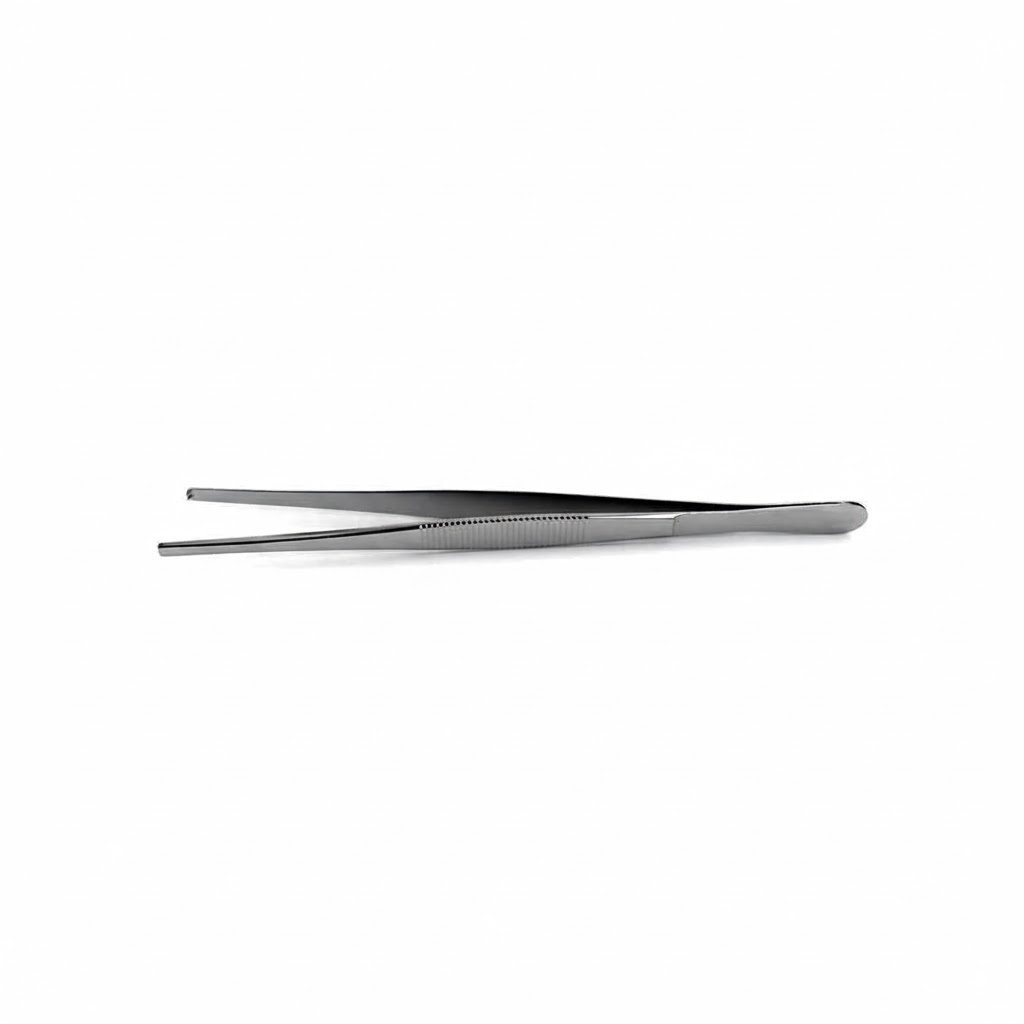
This is the range rather than a single instrument, and the span is deliberate. 11.5 cm is finger-held for surface work; 40 cm reaches the bottom of an abdominal or thoracic cavity with the hand well outside it. Between them sit six intermediate lengths, because the right forceps is the one whose tips reach the tissue while the hand stays out of the field — and that distance changes with every exposure.
Tooth count is the second choice and it follows the tissue, not the length. 1×2 interlocks at one point for the firmest hold on dense fascia; 4×5 spreads twenty points across softer or more variable tissue so no single point tears through. Ordering both together — a length and a tooth pattern — is what makes this the pattern most general sets are built from rather than a specialist instrument.
Specifications
| Type | Tissue forceps, standard pattern |
| Lengths | 11.5, 12.5, 14, 16, 20.5, 30, 35 and 40 cm |
| Teeth | 1×2, 2×3, 3×4 or 4×5 |
| Handle | Serrated |
| Use | General tissue handling across surgical procedures |
| Material | German surgical stainless steel |
| Autoclavable | Yes |
Reviews
There are no reviews yet.