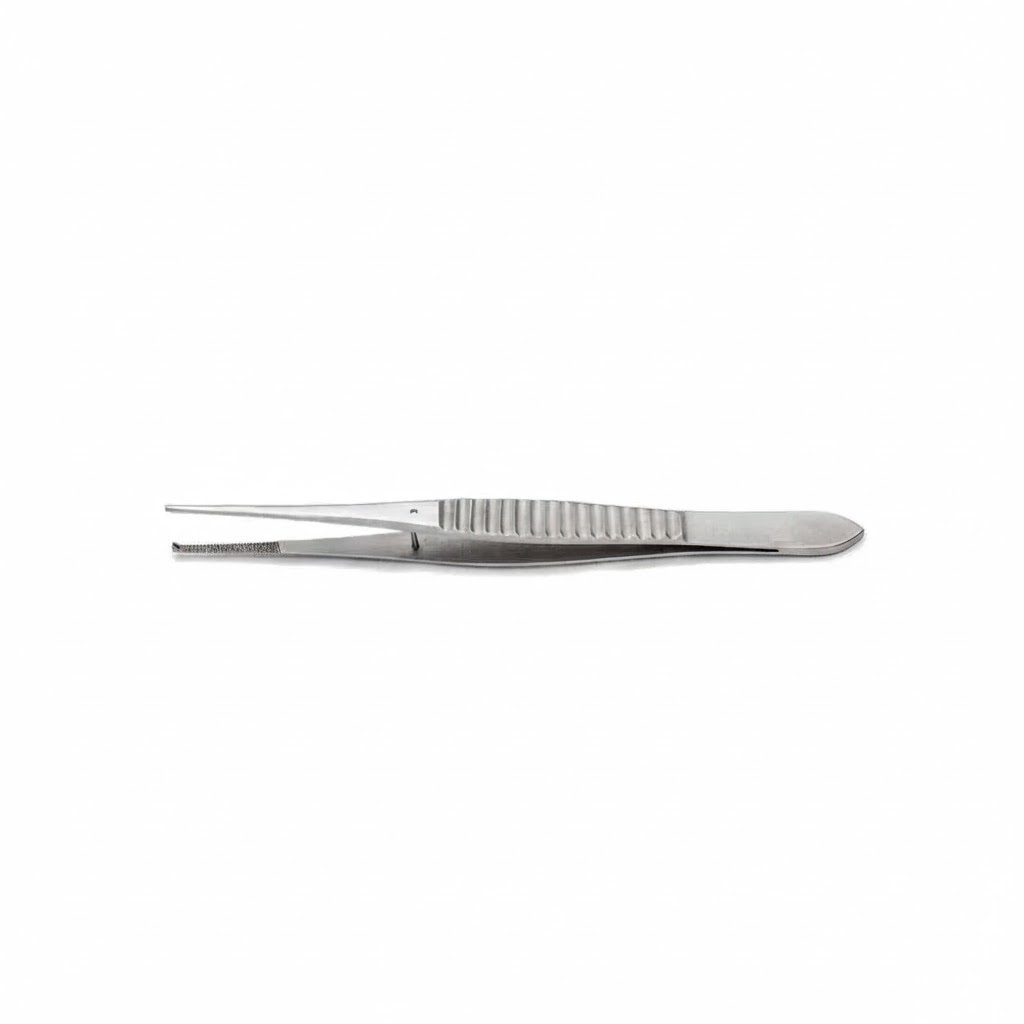
The stabilising pin is the feature worth knowing about. On a fine forceps the two arms are slim enough to flex sideways under load, and when they do the tips slide past each other instead of meeting — at which point the instrument grips nothing and the tissue it was holding is released without warning. A pin between the arms lets them close but not deviate laterally, so the tips meet squarely every time regardless of how the instrument is squeezed.
That matters most on this pattern because it carries teeth on a serrated jaw. A 1×2 tooth has to interlock precisely — one tooth between two — and cross-over misses the interlock entirely. The serrated surface behind handles flat material, so the same instrument dissects, holds tissue and manages a suture without being exchanged.
Specifications
| Pattern | Gillies dissecting forceps, fine |
| Overall length | 15 cm (6″) |
| Jaws | Fine serrated with 1×2 teeth |
| Feature | Stabilising pin prevents tip cross-over |
| Use | Microdissection and delicate tissue manipulation |
| Material | German surgical stainless steel |
| Autoclavable | Yes |
| SKU | NJM-14425 |

Reviews
There are no reviews yet.