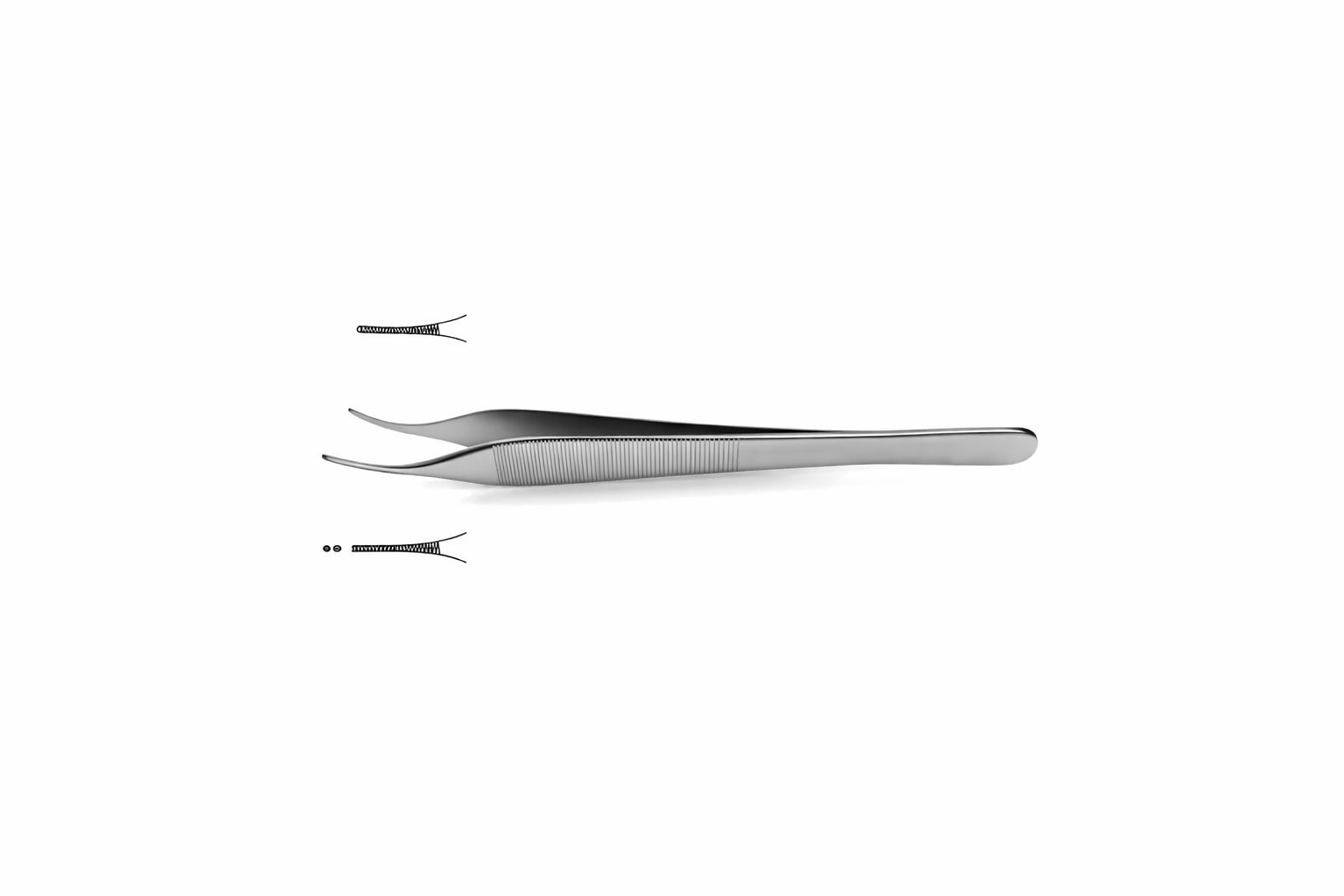
Ordinary serrations are parallel ridges, and they hold well against a pull across the ridges — but let material slide along them. In practice that is a real limitation, because a suture end or a fold of gauze rarely leaves the jaws in the one direction the serrations were cut to resist. Crossing the serrations into a grid removes the escape route: whichever way the material is pulled, it meets ridges running across that line.
The result is more holding power for the same closing pressure, which matters on an instrument gripped between finger and thumb. A surgeon cannot squeeze a thumb forceps as hard as a ratcheted clamp, so the grip has to come from the tip surface rather than from force. That makes cross-serration the difference between holding a slippery, blood-wetted material and repeatedly losing it.
Specifications
| Pattern | Adson thumb forceps, cross-serrated |
| Tips | Cross-serrated |
| Use | Tissue, dressings and suture handling |
| Material | German stainless steel |
| Autoclavable | Yes |
| SKU | NJM-14378 |
Reviews
There are no reviews yet.