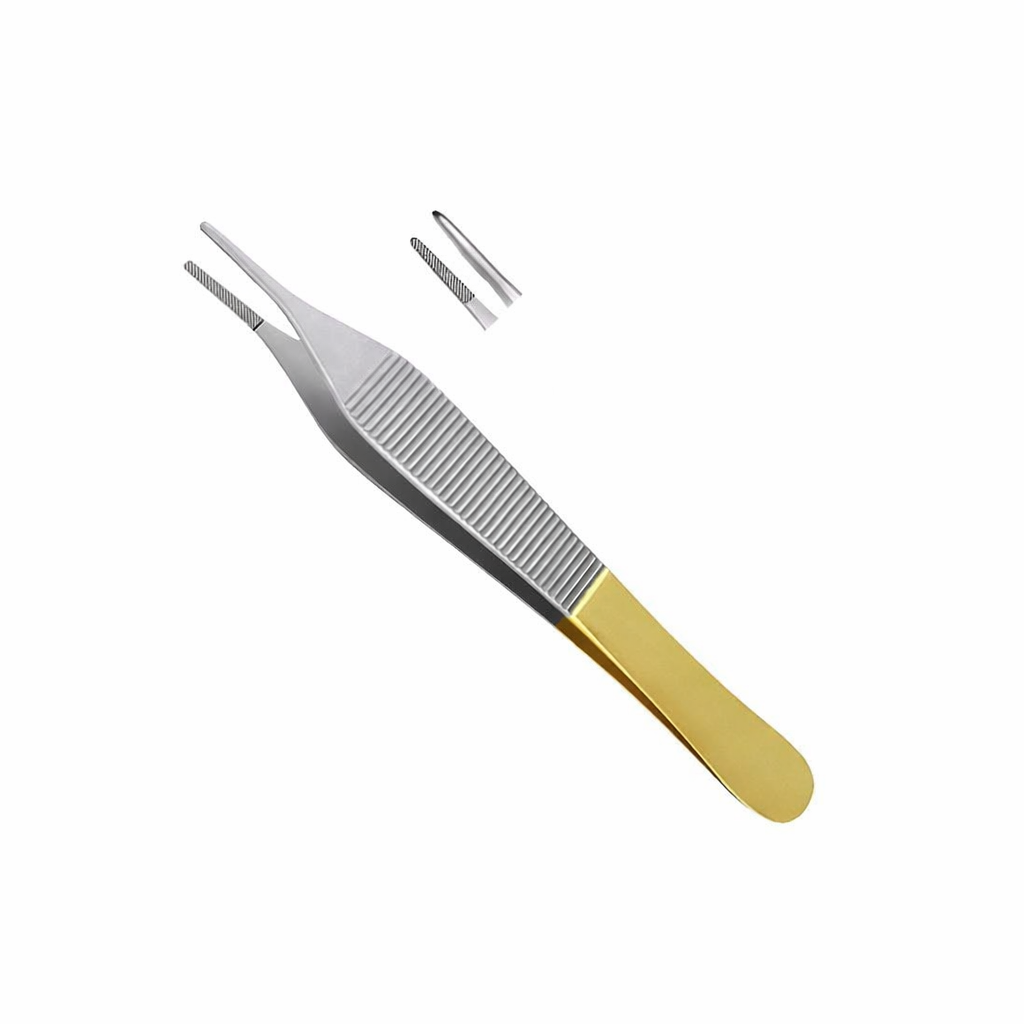
The difference between this and the steel Adson is what the serrations can take. Steel serrations are fine for gauze and soft tissue but flatten against a needle body, and once flattened the forceps rotate on the needle instead of holding it. Tungsten carbide serrations are milled into a far harder insert, so the tooth profile survives being closed on steel needles repeatedly.
That widens what one instrument covers. With carbide jaws the same forceps handles dressing material, holds a needle steady while it is repositioned, and grips fibrous tissue that would slide out of a smooth or worn jaw — tasks that would otherwise be split across two or three instruments. The trade is cost against working life: carbide is dearer to make and outlasts steel by years in a set that is reprocessed daily.
Specifications
| Pattern | Adson dressing forceps, tungsten carbide |
| Jaws | Precision-milled tungsten carbide serrations |
| Use | Tissue, needles, sutures and dressing material |
| Material | German stainless steel with tungsten carbide |
| Autoclavable | Yes |
| SKU | NJM-14375 |
Reviews
There are no reviews yet.