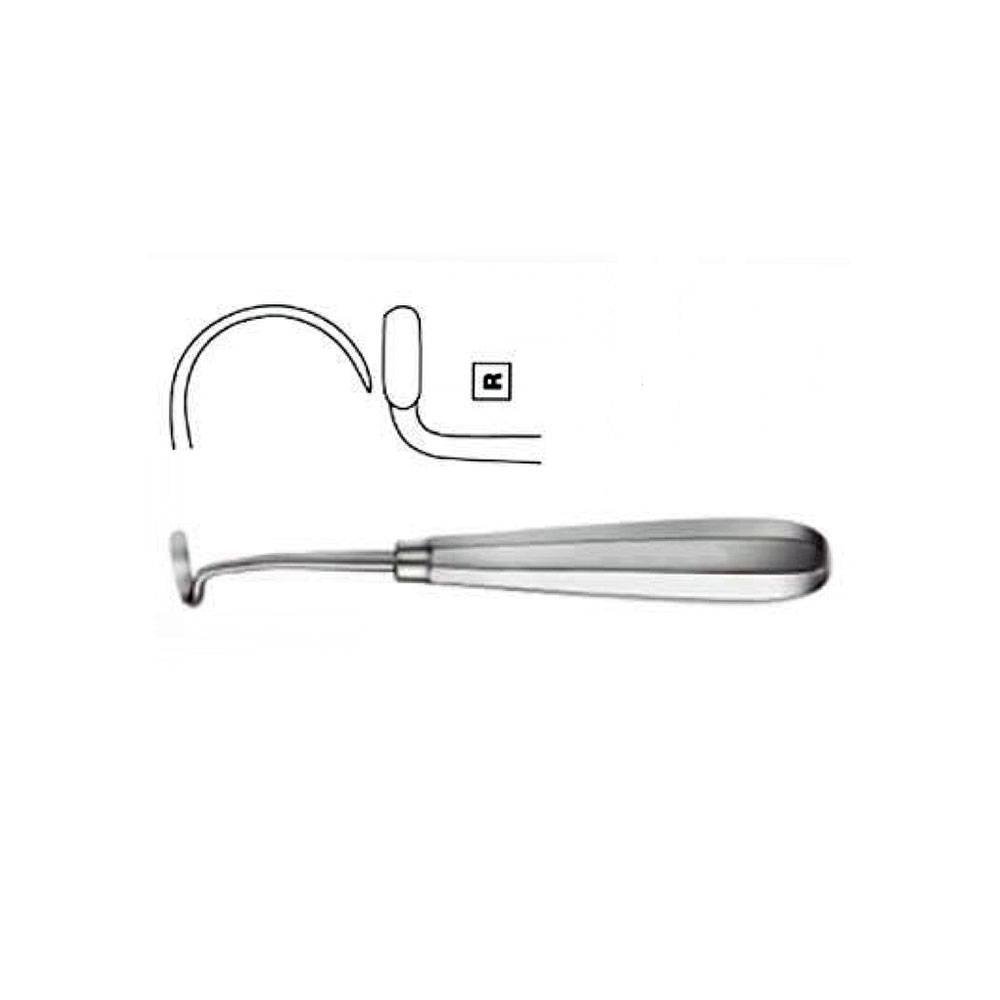
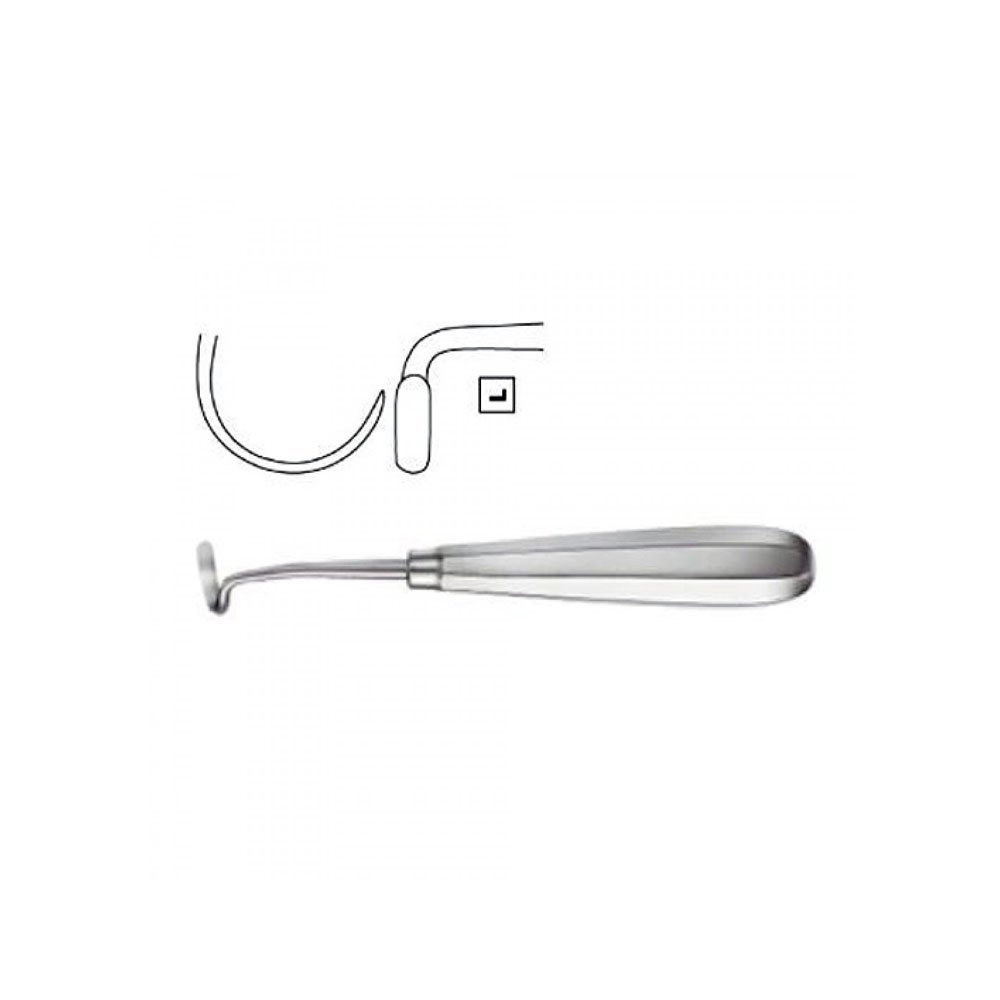
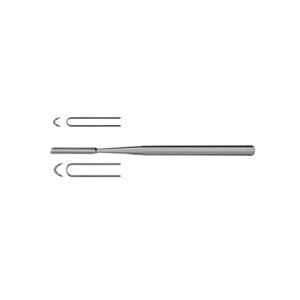
Left and right versions exist because a rib is curved and the instrument has to follow that curve in the direction it runs. Harvesting costal cartilage means stripping perichondrium from a rib deep in a small incision, working along the length of the rib in one direction; a raspatory curved the wrong way meets the bone at an increasingly poor angle as it advances and eventually cannot maintain contact at all. Matching the curve to the side keeps the working edge flat against the cartilage for the whole pass.
The instrument is short at 17 cm because rib harvest is done through a small incision with the surgeon’s hand close to the chest wall, and control at the tip comes from a short lever rather than reach. Stripping perichondrium cleanly matters beyond the harvest itself: an intact perichondrial layer left behind is associated with better donor site recovery, and cartilage taken without shredded attachments is easier to carve into a usable graft.
Specifications
| Pattern | Daniel Gubisch rib raspatory |
| Overall length | 17 cm |
| Options | Left-curved or right-curved |
| Use | Costal cartilage harvest and perichondrial stripping |
| Material | German stainless steel |
| Autoclavable | Yes |

Reviews
There are no reviews yet.